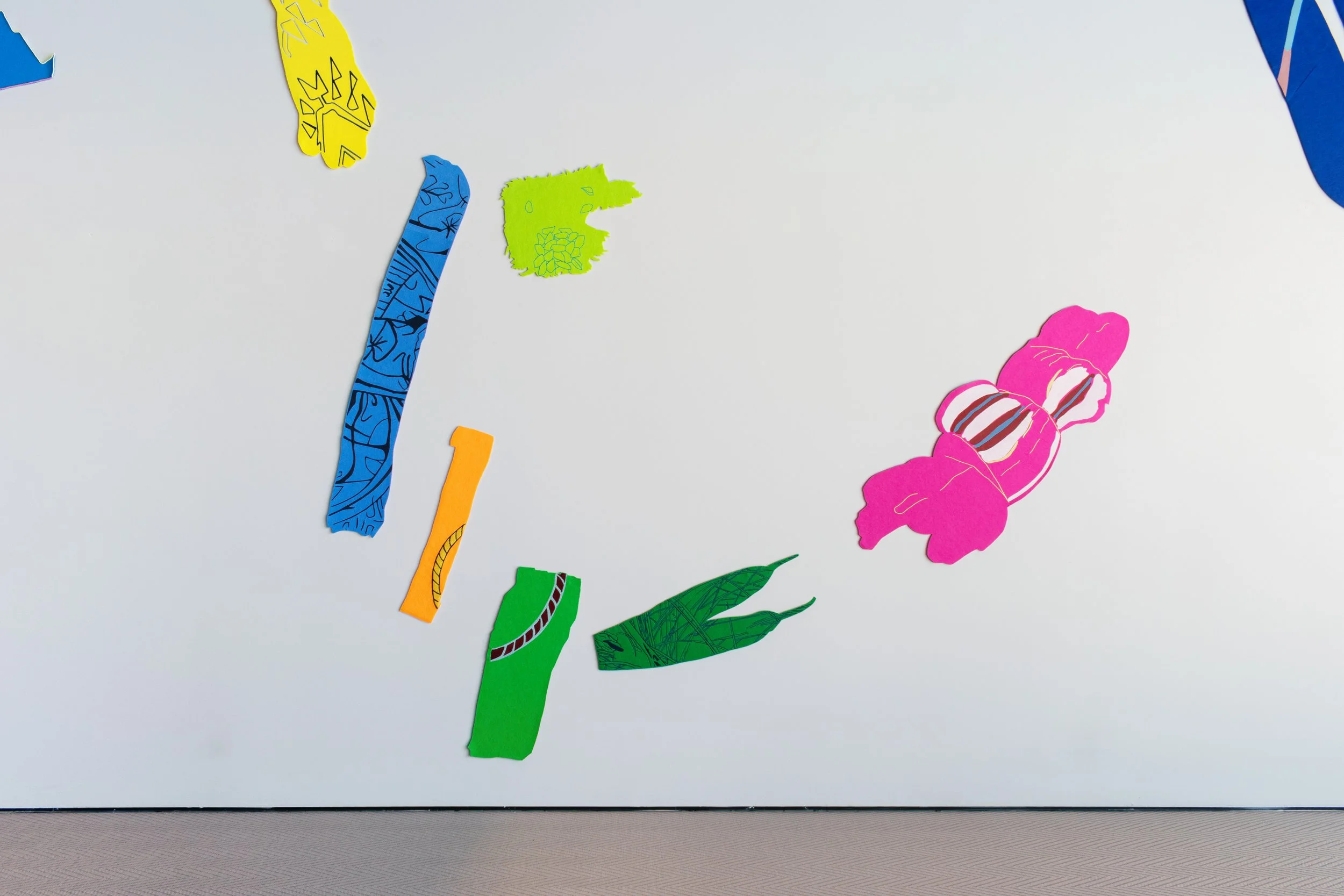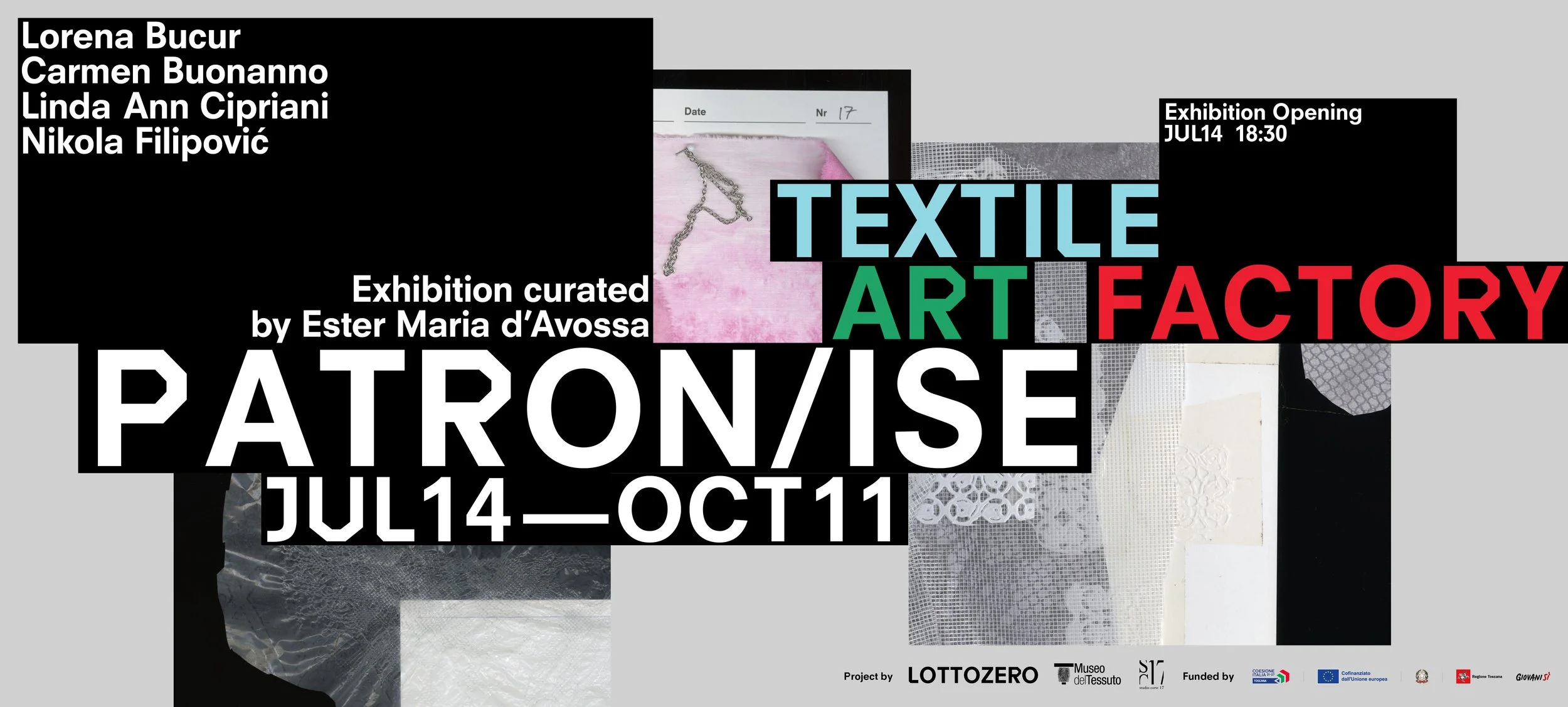
On the occasion of the 22nd Giornata del Contemporaneo, promoted by Amaci, Lottozero joins the programme with a special opening of “patron/ise”, this Saturday, 10 October
from 11 am to 1pm.
At 12 pm there will be a guided tour with Alessandra Tempesti, curator of Lottozero Kunsthalle.
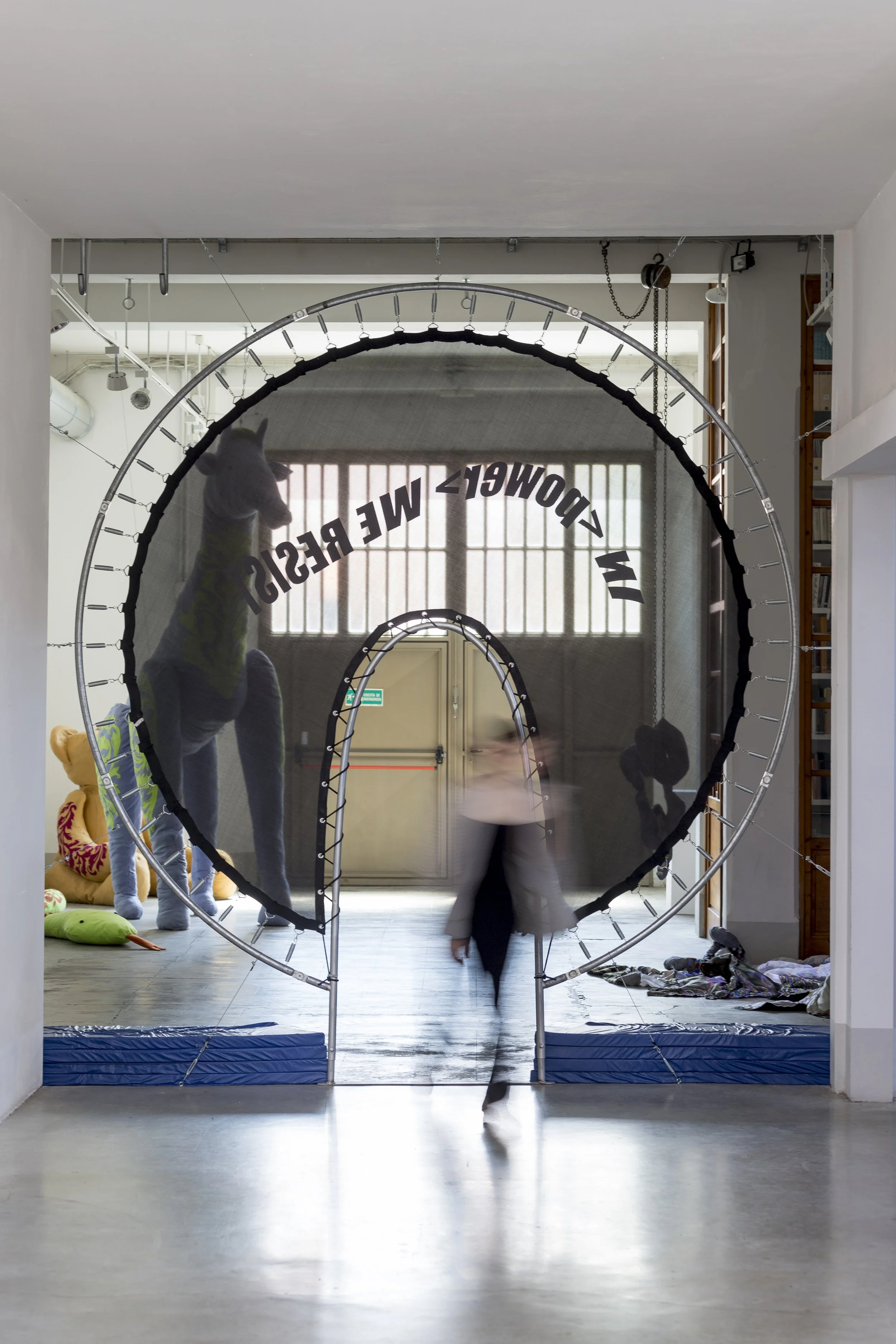
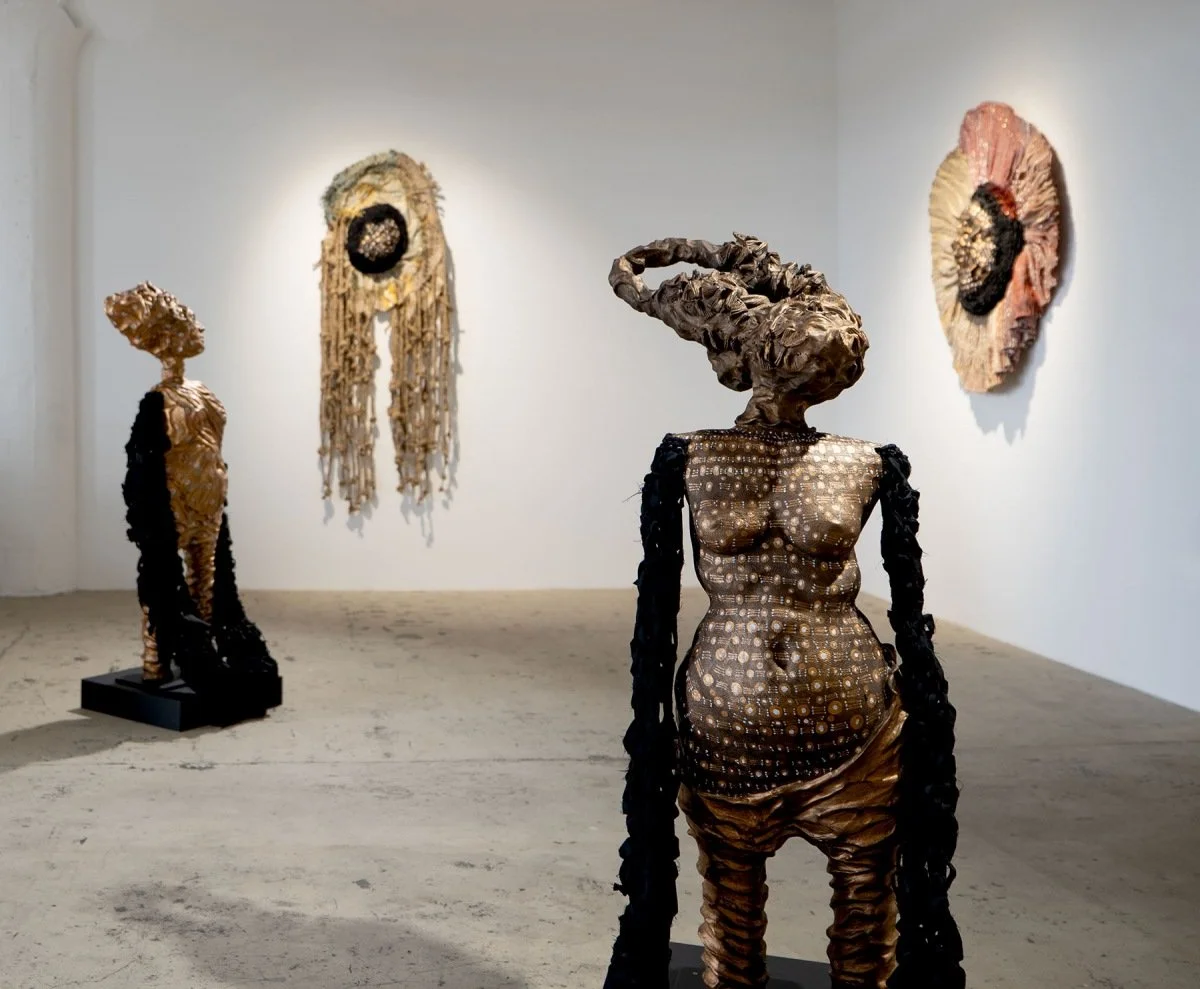
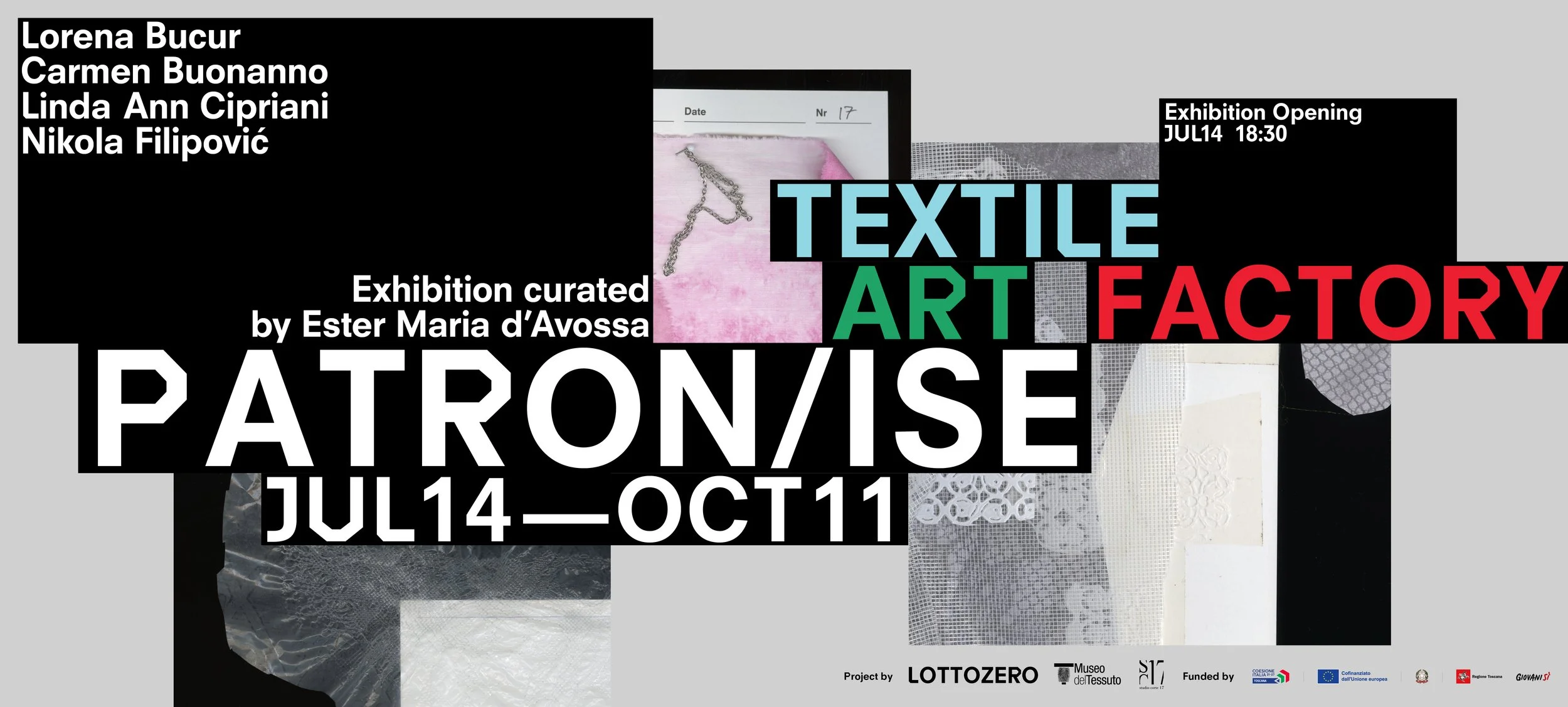
Curated by Ester Maria d’Avossa, curator-in-residence, patron/ise brings together works by Lorena Bucur, Carmen Buonanno, Linda Ann Cipriani and Nikola Filipović, developed during a six-month residency in Prato.
The exhibition looks at the conditions that make artistic production possible, bringing into focus the forms of labour, negotiation, relationships and compromise that often disappear behind the finished work. In dialogue with Prato’s textile context, patron/ise draws a parallel between artistic and textile production: both emerge from layered processes, skills and forms of labour that tend to become invisible in the final object.
patron/ise concludes the first residency cycle of Textile Art Factory, a project promoted and coordinated by Lottozero in partnership with Museo del Tessuto di Prato and Studio Corte 17 and supported by the Tuscany Regional Programme FSE+ 2021–2027.
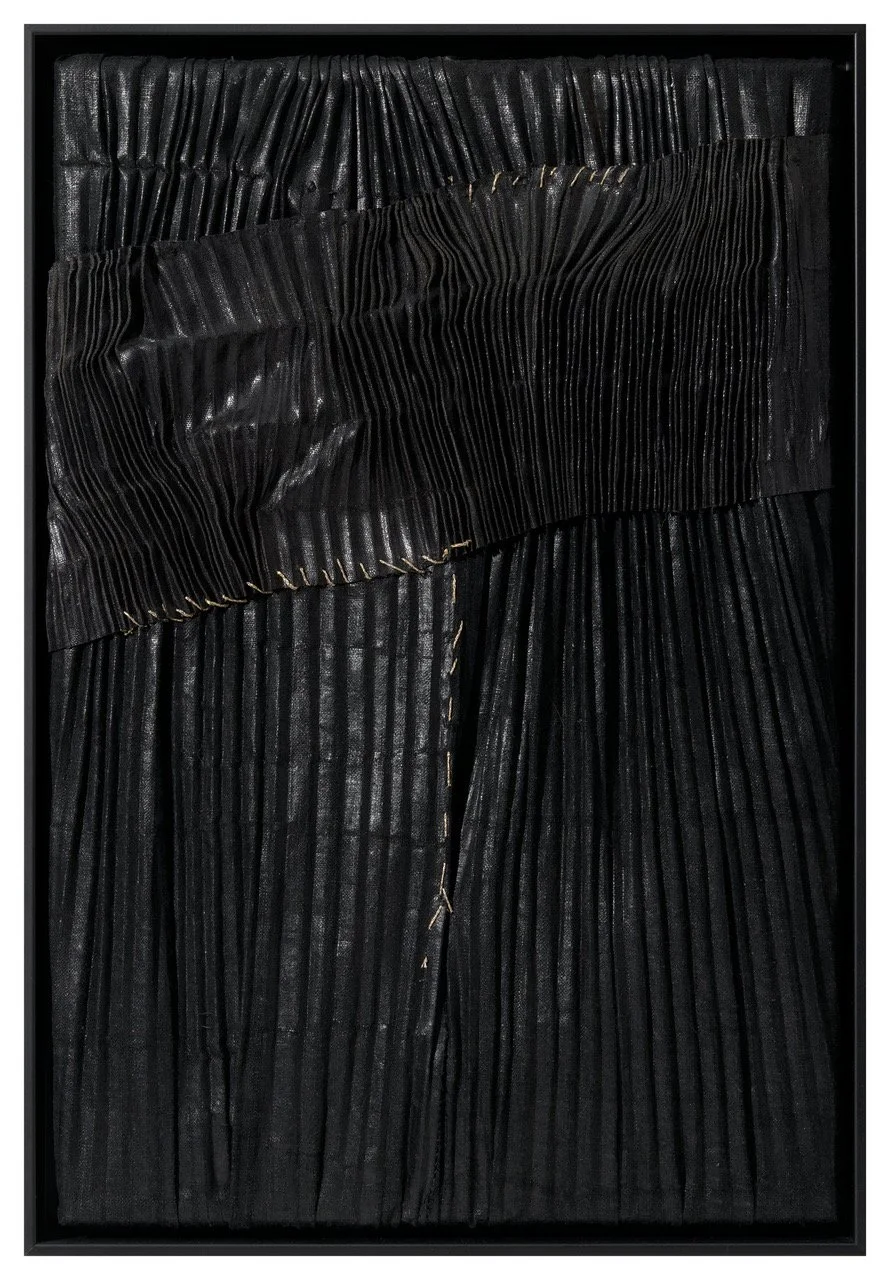
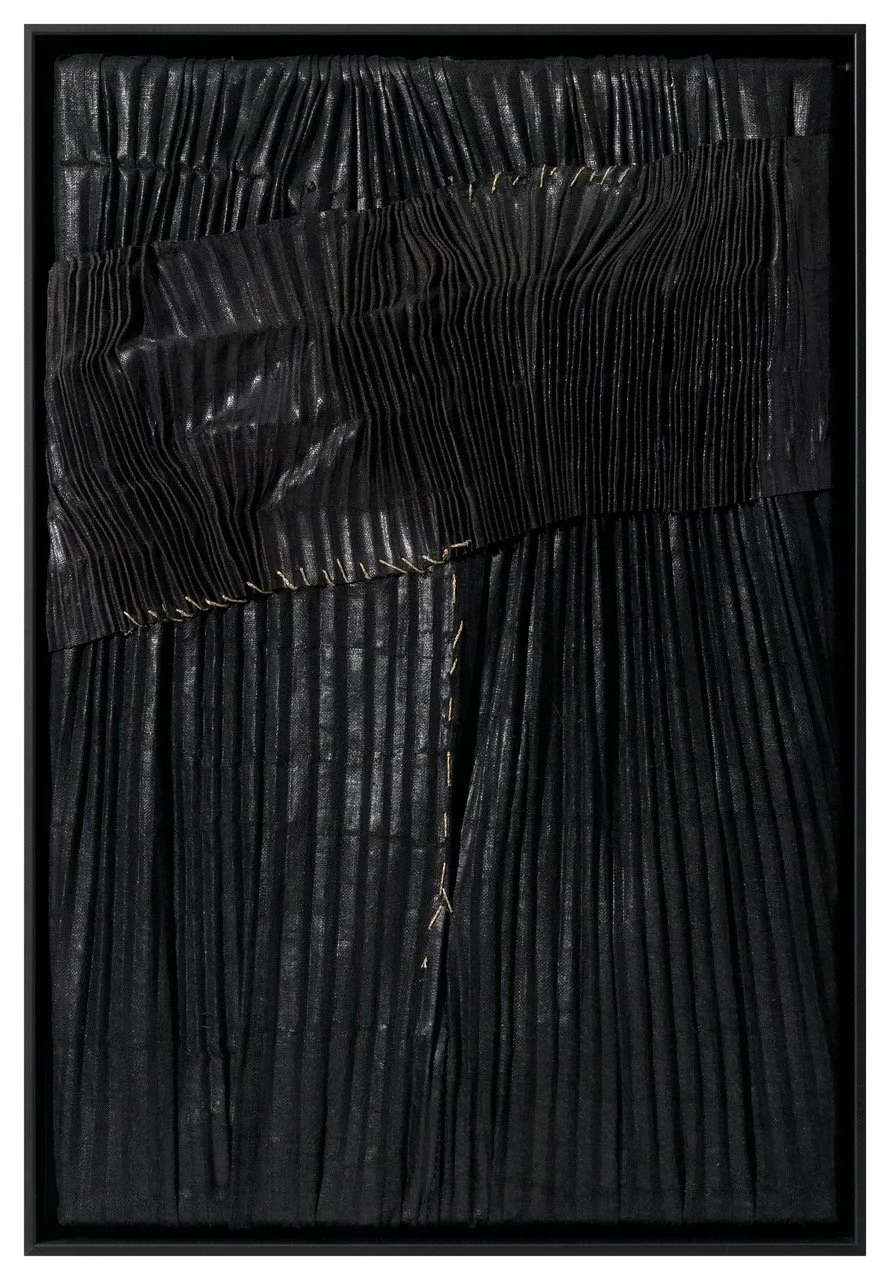
Bianca Lugmayr’s practice delves deeply into language, materiality, and abstraction. Her signature is the fast, freely sewn line, which embraces and highlights the value of imperfection.
In her graphic textile works, the force of the sewing machine needle perforating the fabric intensifies the power of the repeatedly written word.
Across her practice, the line and the textile grid serve as recurring visual tools.
During her residency at Lottozero, Lugmayr experimented with the thicker line of wool yarn, drawn through the fabric using the tufting technique. This exploration forms part of a broader body of research investigating the mathematical theory of sets and its philosophical implications.
The residency is supported by Land Vorarlberg, Austria, as part of the „Go Scholarship 2026“ program.
Bianca Lugmayr was born 1979 in Wels (Austria) and lives and works in Vorarlberg. She studied pharmacy at the University of Innsbruck as well as textile/art and design at the University of Arts Linz under Marga Persson and cultural management at the Institute for Cultural Concepts in Vienna.
Bianca Lugmayr, Texture III, old juppe (traditional costume), wood, 45 x 36 cm.
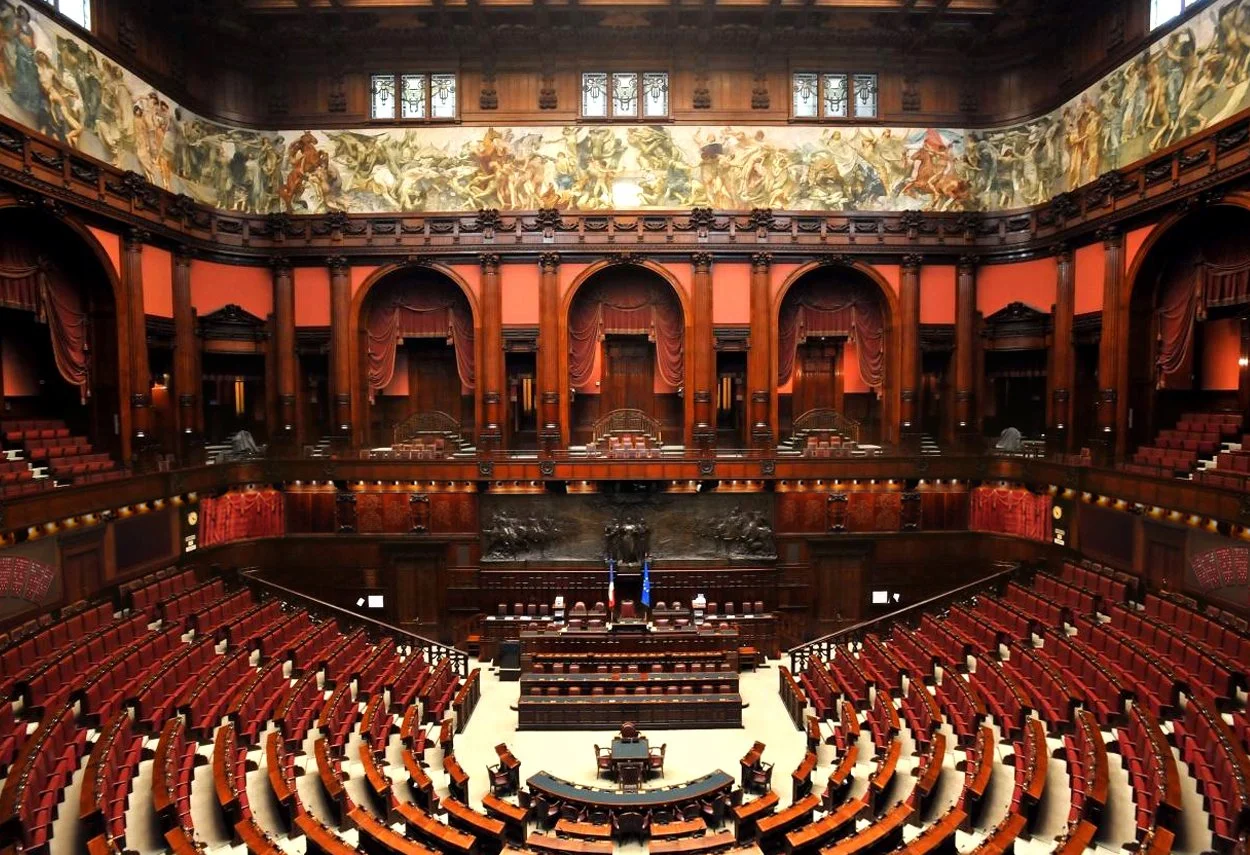
Montecitorio Palace, Chamber of Deputies, Rome
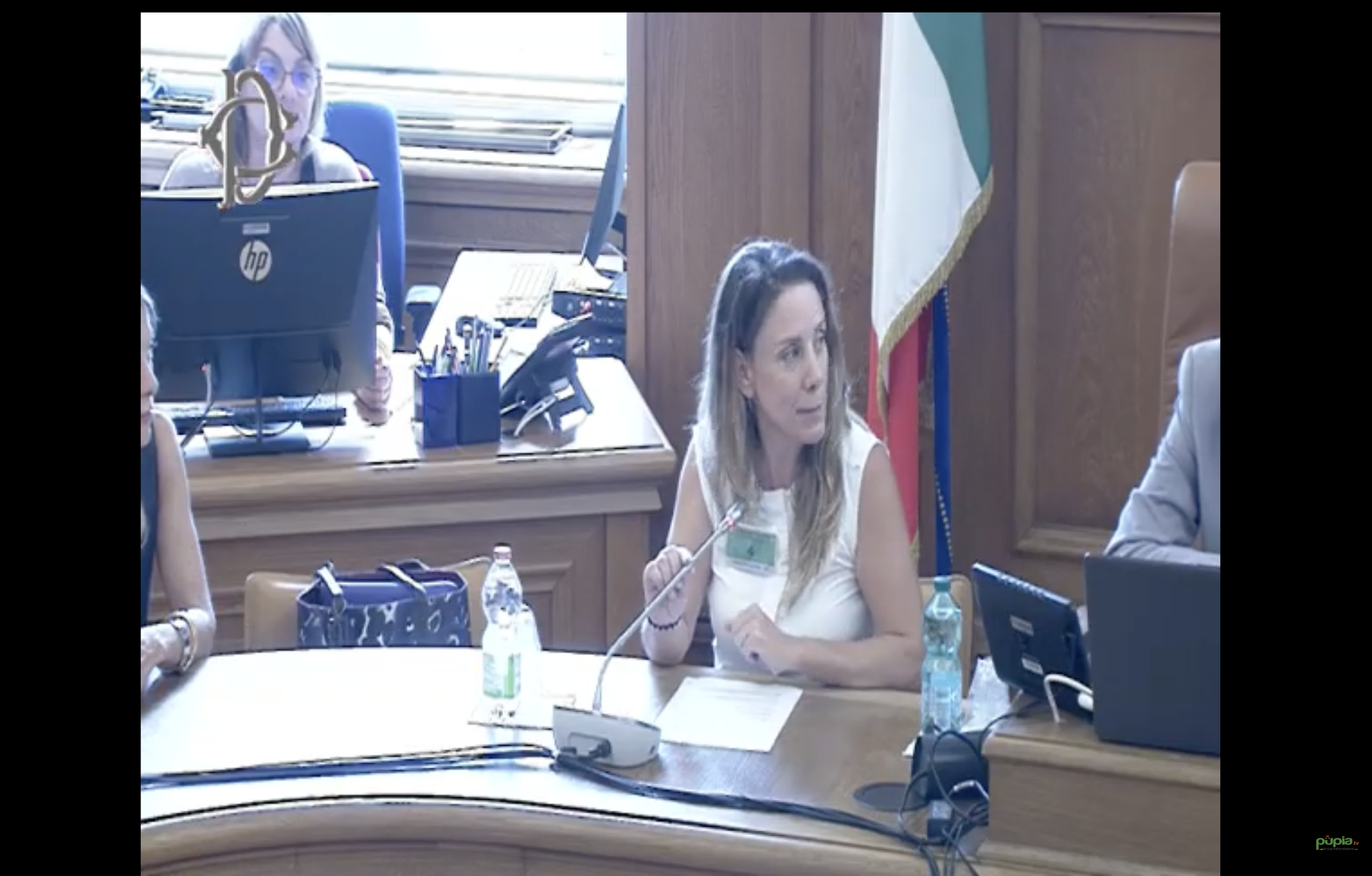
On September 22. 2026, Lottozero was invited to the Italian Chamber of Deputies in Rome to take part in a hearing before the Productive Activities Committee, as part of its fact-finding inquiry into the textile sector in light of recent developments in European legislation.
Together with representatives of the Fondazione Museo del Tessuto di Prato and CNA – Confederazione Nazionale dell’Artigianato e della Piccola e Media Impresa, Tessa and Arianna Moroder represented Lottozero, bringing to the discussion our experience working at the intersection of emerging design, textile research and Italian manufacturing.
In her speech, Tessa addressed a question that has become increasingly urgent in our work: if we want to preserve Italy’s extraordinary textile manufacturing heritage, who will provide work for this manufacturing sector in the future?
Drawing on ten years of experience at Lottozero, she highlighted the need to invest in a new generation of independent Italian designers and brands capable of producing locally and building lasting relationships with the country’s manufacturing districts. Today, these emerging businesses face a profoundly uneven market, caught between fast fashion and large luxury groups, while being asked to produce sustainably, fairly and locally.
The intervention called for concrete financial instruments adapted to the realities of young creative businesses, access to professional expertise, and support rooted in Italy’s manufacturing territories rather than concentrated exclusively in established fashion centres.
For Lottozero, supporting young designers is not only a cultural question, but a question of industrial policy. Designers are not simply beneficiaries of Italian manufacturing: they can play an essential role in preserving its skills, knowledge and specialised supply chains, and in building their future.
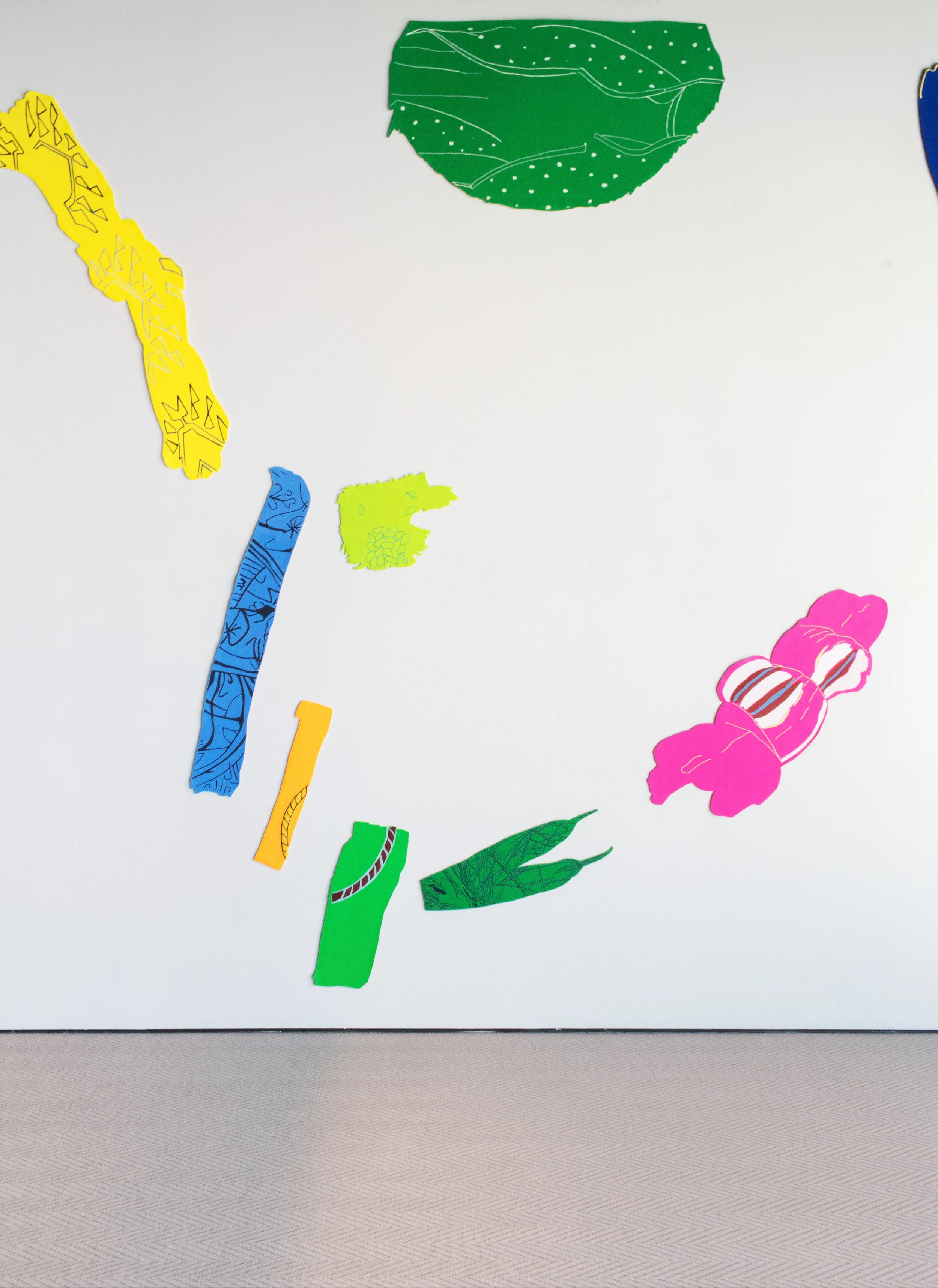
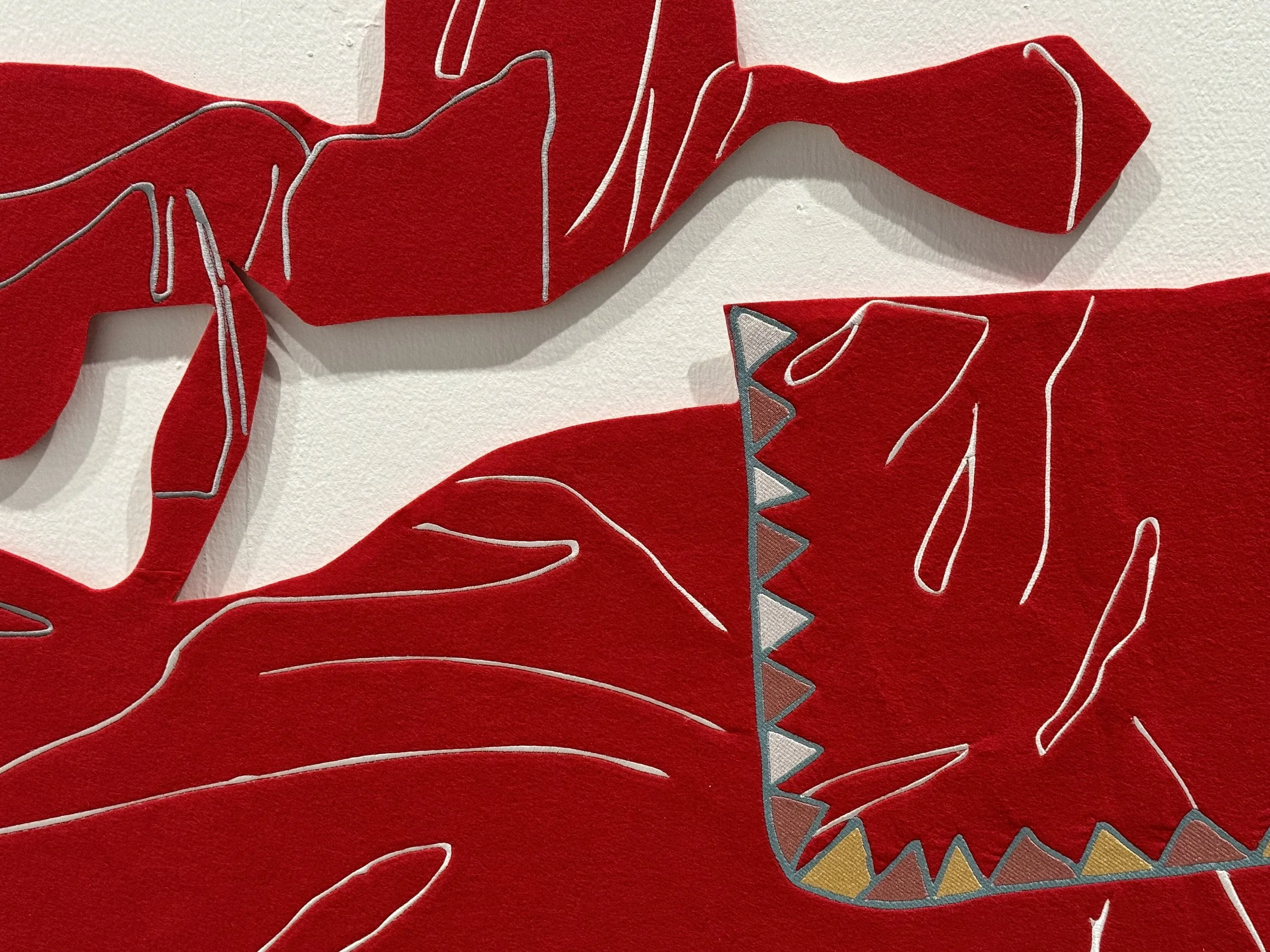
Shifting Horizons, detail, 2025, variable size, machine embroidery on felt.
Gergana Tabakova explores how the spaces we inhabit are shaped by architecture, objects, decoration, and everyday materials, and how these seemingly stable structures reflect social conventions and cultural habits. While painting remains the starting point of her work, she moves beyond the traditional canvas, engaging with architectural forms, textiles, ornaments, and decorative motifs as carriers of memory and meaning.
Through fragmentation, Tabakova disrupts established systems of order, creating moments of imbalance and unexpected connections between individual elements. In this process, material and decorative forms become traces of narratives related to the home, labor, gender roles, personal experience, and collective traditions.
Her work develops a dynamic and open-ended visual language in which painting, materiality, and spatial structures continuously intersect and reconfigure one another.
Gergana Tabakova is a visual artist based in Sofia, Bulgaria. She holds an MA and PhD in Painting from the National Academy of Arts, Sofia, where she is currently an assistant professor in the Textile - Art and Design Department. She has exhibited in many solo and group shows, in Bulgaria and abroad; in 2025 she was featured in the 5th Hangzhou Triennial of Fibert Art, Zhejiang Art Museum, Hangzhou, China.
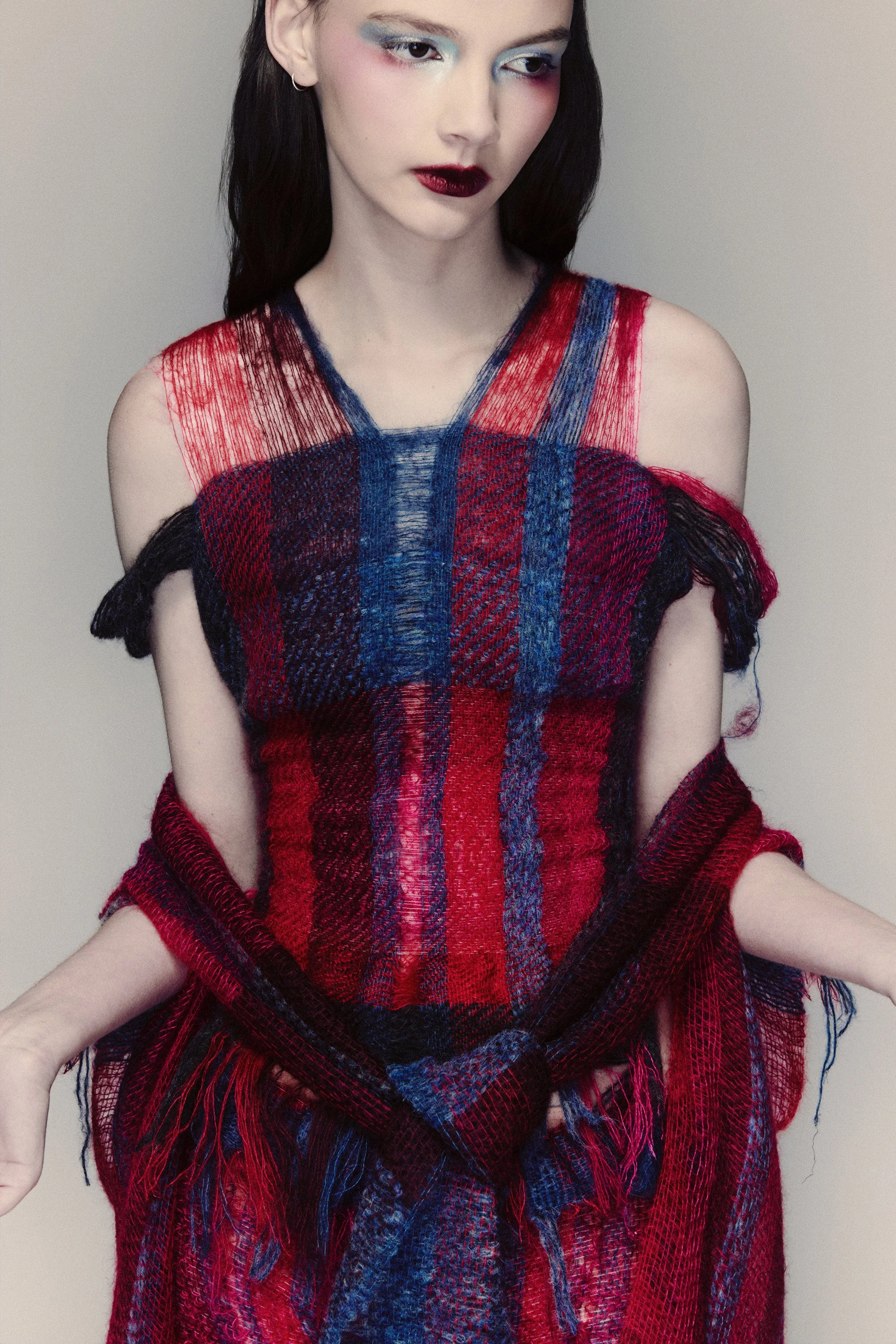
Indigo Stuart is a fashion and textile designer whose practice explores emotional durability through weaving, material experimentation and the development of innovative textile methodologies.
Her work investigates how garments can be re-engineered as systems of value and longevity through weaving as a zero-waste design method. Stuart develops modular garments constructed directly on the loom, integrating structure, fit and function at the point of fabrication to eliminate cut-and-sew waste.
Alongside material innovation, Stuart considers emotional durability as a framework to design clothing as carriers of memory and identity, a critical response to overconsumption and disposability.
Stuart completed a Bachelor of Fashion (Design) (Honours) at RMIT University in Melbourne in 2024. Her work has received significant recognition in Australia: in 2025 she was awarded the National Graduate Designer Award and selected by Vogue Australia as a “Class of the Future” designer.
During her month-long residency at Lottozero (31.08-27.09), Stuart is extending her zero-waste methodology into knitwear, developing garment prototypes that combine knitting and weaving, with an hybrid approach which allows different textile structures to respond to different relationships between garment and body, while maintaining the logic of constructing the garment through textile fabrication rather than conventional cutting and sewing.
Indigo Stuart, Inheritance, 2024.
Photo: Jonathan Orrell
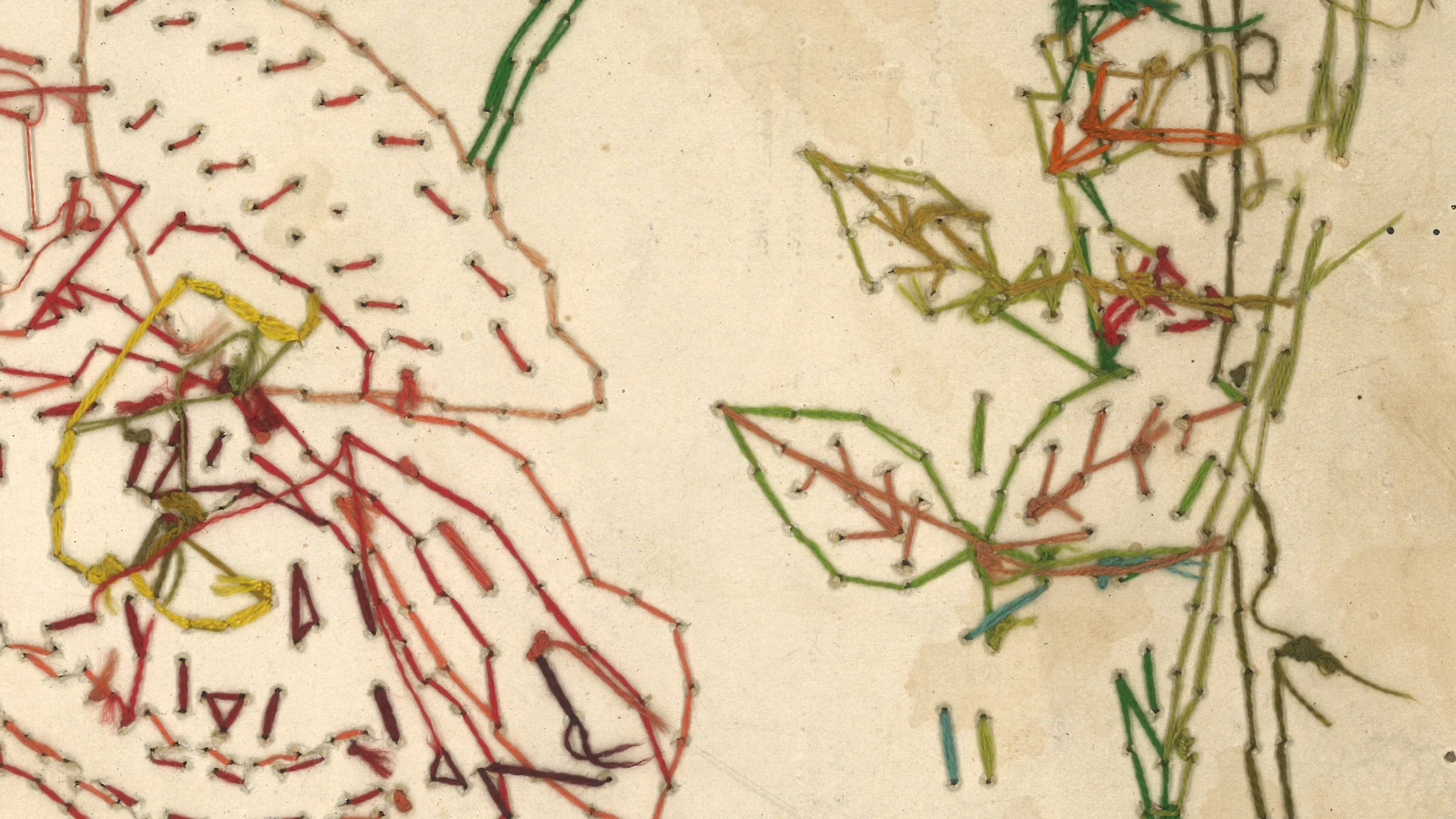
Ricordo di un tempo - Livia 1926, 1926, ricamo su carta, verso.
Once again, we take part as a partner in Bolzano Art Weeks, this year in its sixth edition (25.09-04.10.2026).
On September 25, we will present Flora è contrariata (Flora is upset), a new performative project by Nadia Tamanini, curated by Lottozero and produced for BAW 2026.
Developed especially for BAW 2026, Flora è contrariata is a performative piece that gives voice and form to Flora, a figure of nature and spring, here outraged, offended yet resilient. Through a poetic language that blends the visual and the auditory, the textual and the material, Nadia Tamanini breaks language apart and reconstructs it, opening up new spaces for reflection in the friction between sound and meaning, error and rewriting.
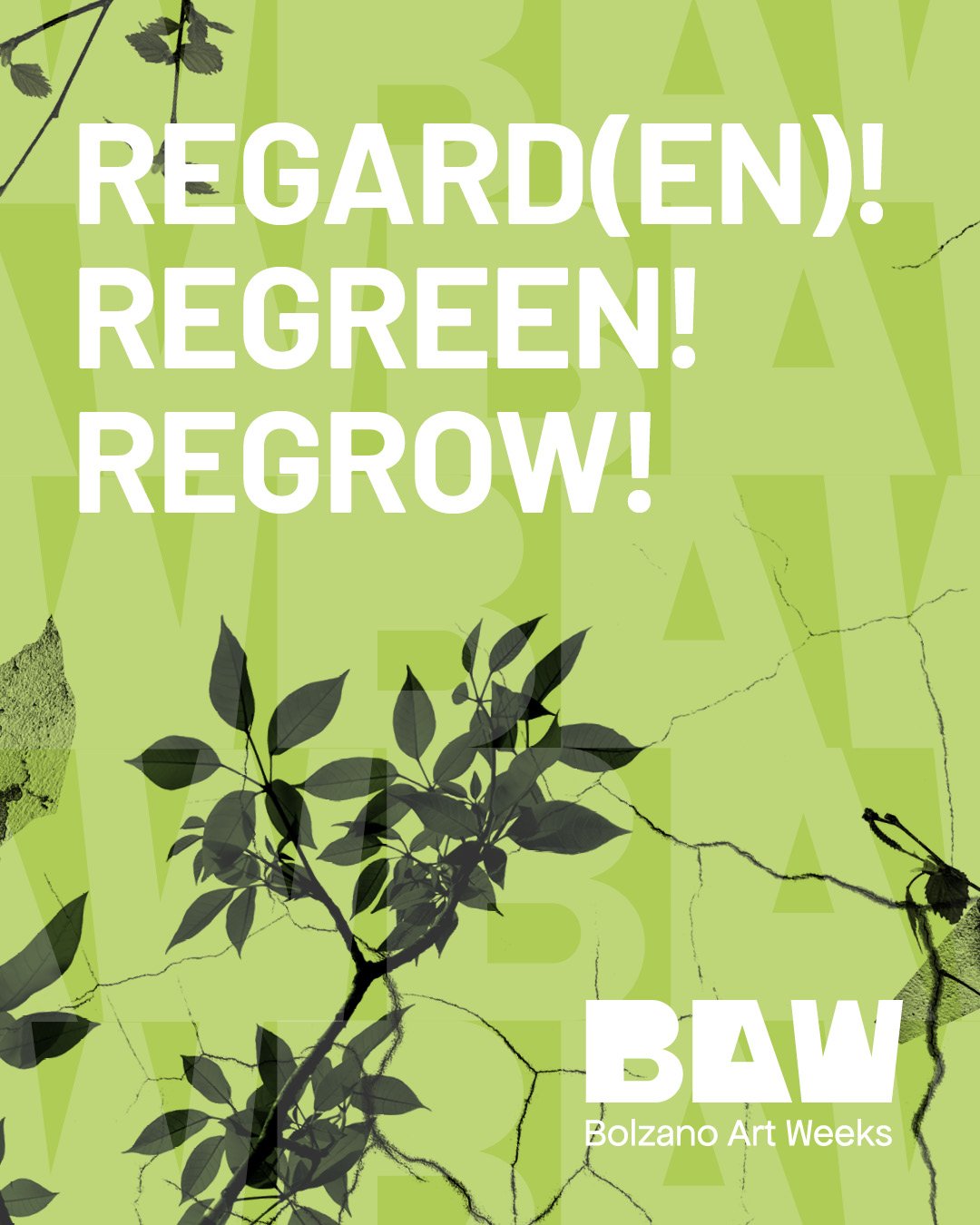
The project resonates with this year’s theme, REGARD(EN)! REGREEN! REGROW!, an invitation to reconnect with nature through direct experience and action, bringing art, ecology and social participation onto common ground and collectively cultivating change.
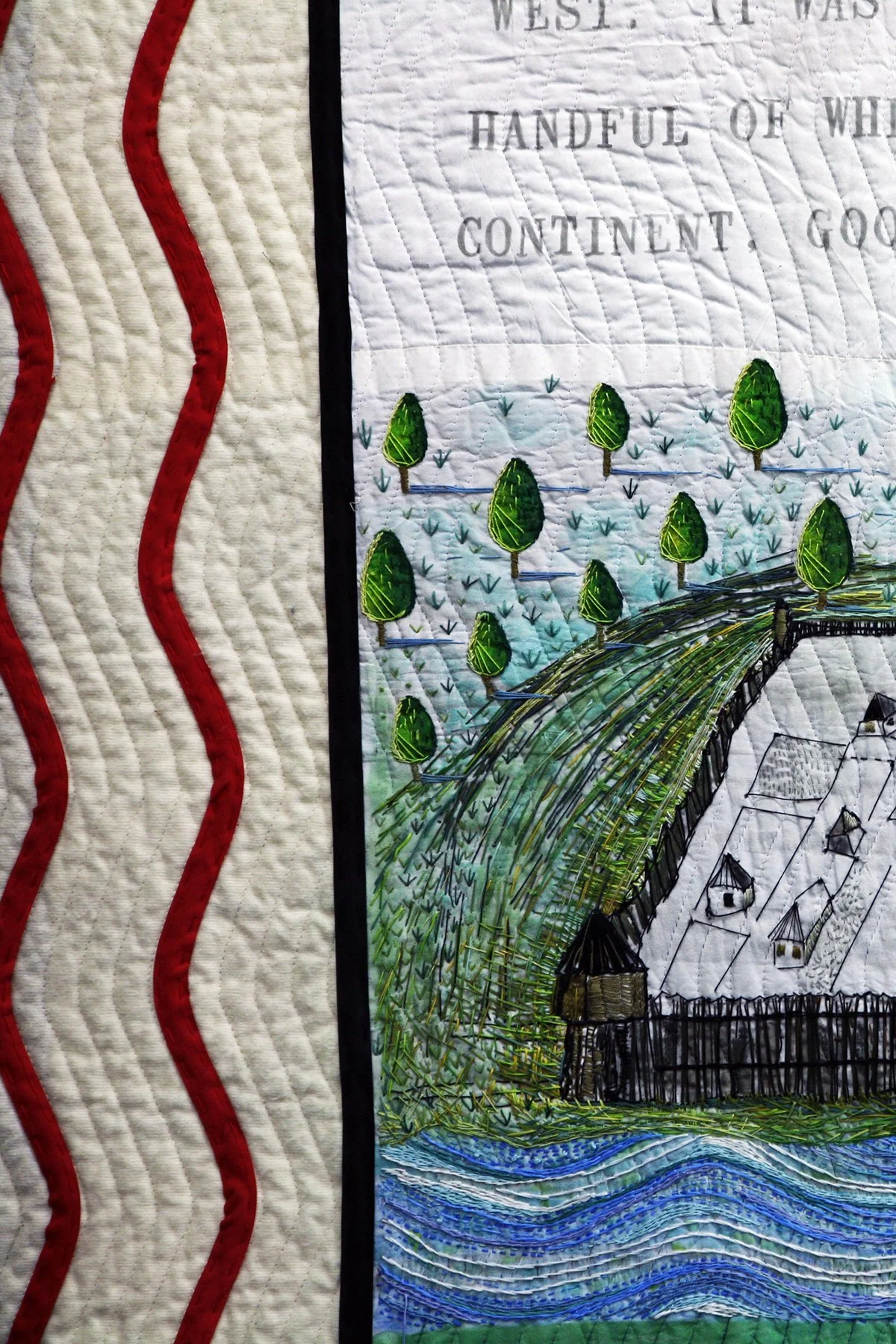
Wrapped in a padded and quilted linen fabric embroidered with words, the artist interacts with a pre-recorded composition that becomes a visual and sonic score. Two textile sculptures from the Imparaticci series extend this exploration of language, error and transformation. The sculptures were created during Nadia Tamanini’s residency at Lottozero in Prato in 2025.
25.09.2026 | h 12.00 & 15.00
Performance, Sound Poetry & Textile Works
Lottozero @ Claudia Polizzi Graphic Design Studio
Via Monte Tondo 1 / Hörtenbergstr.
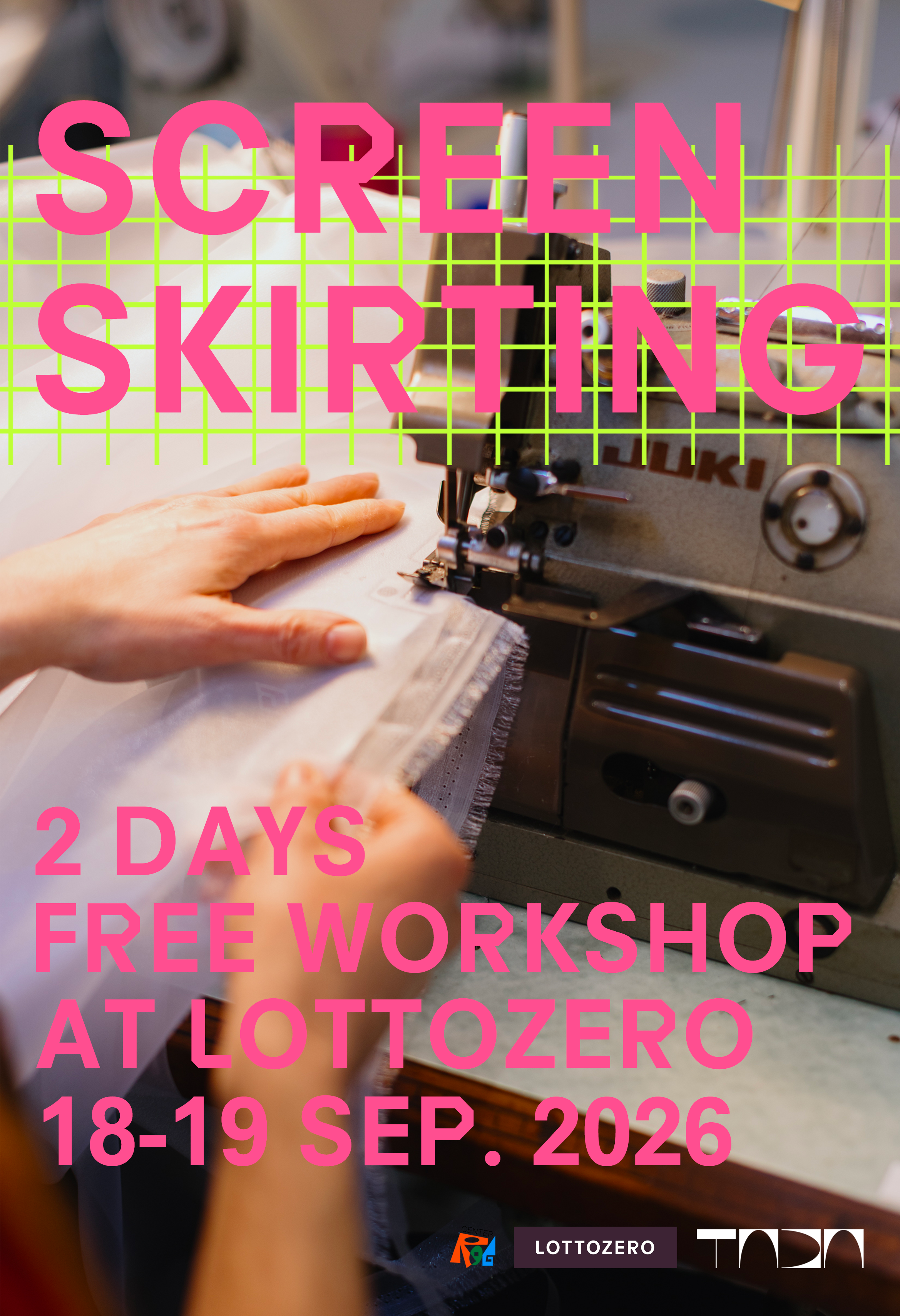
Lottozero, Center Rog and TaDa Residency got together to offer you two days dedicated to screen printing, sewing and making together.
We’ll start by experimenting with screen printing directly on fabric, then move to the sewing machine to transform the printed textile into a garment. The workshop is conceived as a hands-on space to learn through making, exchange skills and explore the possibilities between textile printing and garment construction.
No previous experience is needed — just curiosity and the desire to experiment.
Free workshop · max 8 participants
18–19 September 2026
Lottozero, Prato
Applications open until 10 September at this link.
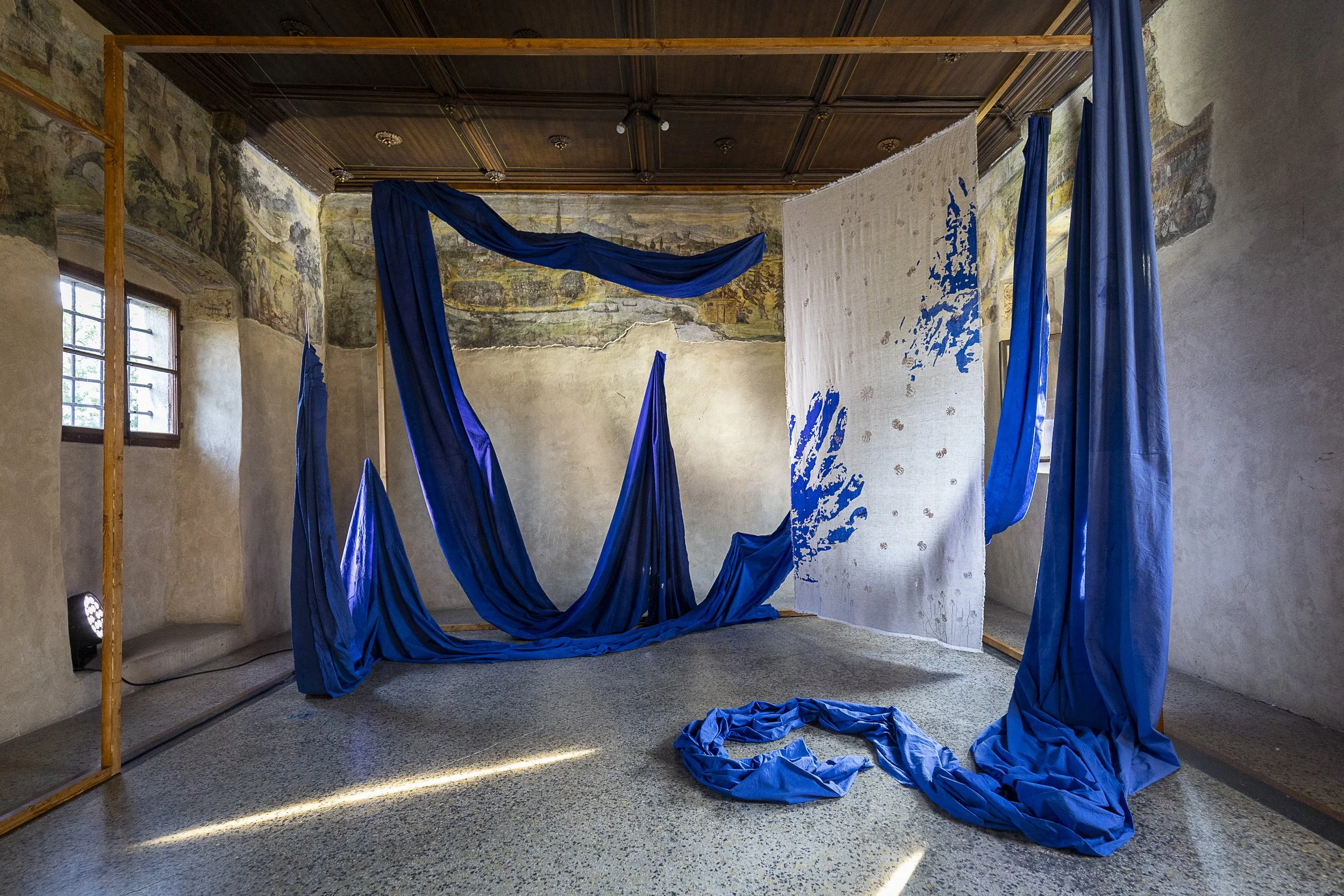
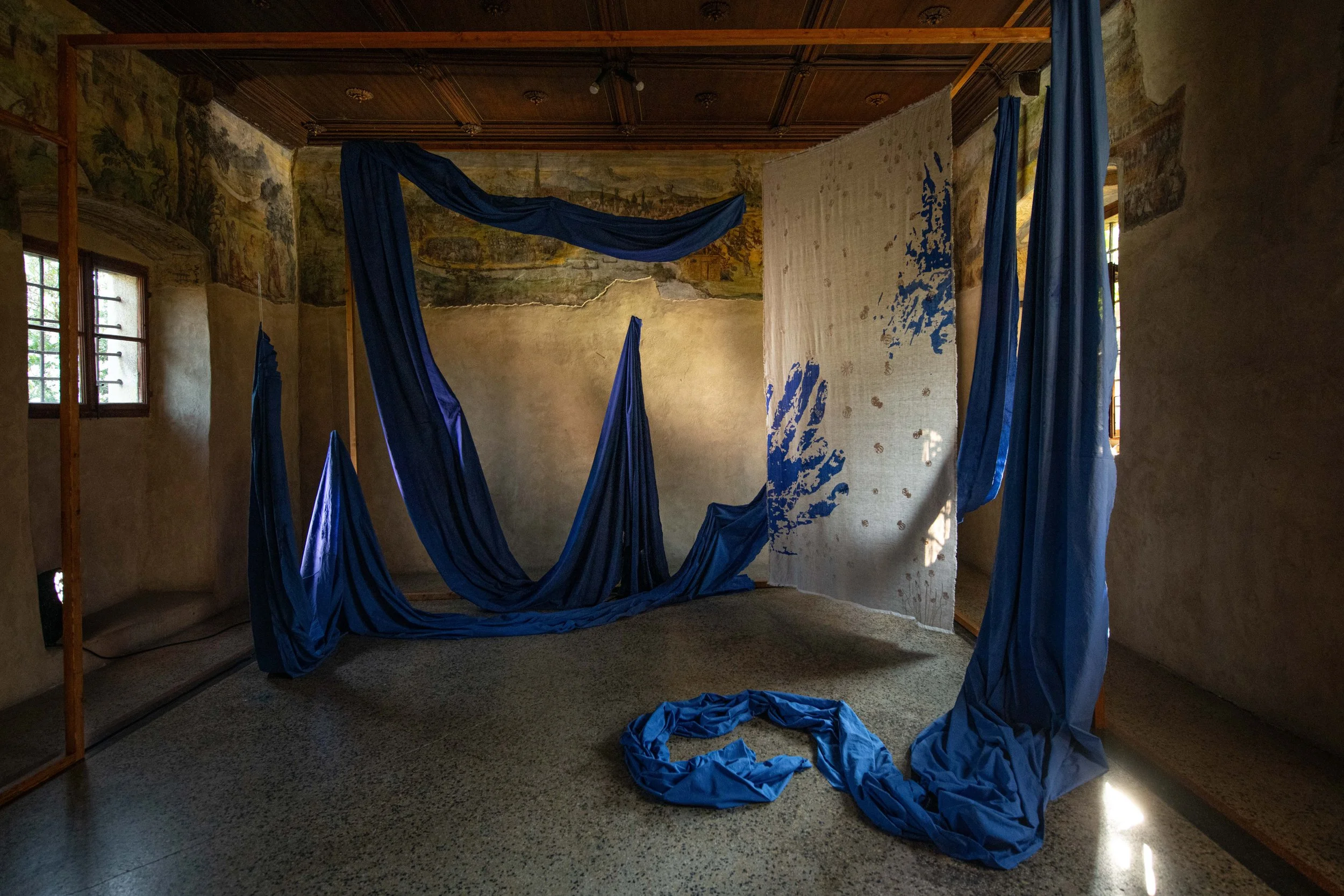
Borjan Litovski, The Tablecloth of Morpheus, 2025, linen, cotton / machine embroidery, screen printing, dyeing. Dimensions: 1. 300 cm × 150 cm / 2. 50 m. Palazzo Lantieri, Gorizia, BIEN - Textile Art Biennial 2025.
Working across textile art, costume design, and scenography, Borjan Litovski creates immersive textile installations where hand-dyed fabrics, light, color, and sound evoke liminal states such as dawn, the hypnagogic state, and the threshold of sleep. Rooted in research into mythology, folklore, and material culture, his practice reinterprets Slavic myths and textile traditions, creating symbolic and abstract environments where narrative, ritual, and spatial experience converge.
During his 10-day residency, Borjan has been developing research for a new project through material sourcing in the Prato textile district, dye experiments, and technical explorations in the Lottozero Textile Lab, working with digital embroidery and the Feltloom.
His residency at Lottozero is the result of the ETA Award 2025, which he received from BIEN – the Textile Art Biennial in Kranj, Slovenia, for his textile installation The Tablecloth of Morpheus.
Borjan Litovski is a Macedonian artist and designer based in Slovenia. He holds a Bachelor’s and a Master’s degree in Textile and Fashion Design from the Faculty of Natural Sciences and Engineering at the University of Ljubljana, where he completed his Master’s studies in 2025.
Alongside his textile practice, he works across costume design and scenography, with experience in opera and theatre productions in Slovenia, the Czech Republic, Poland, and Germany.
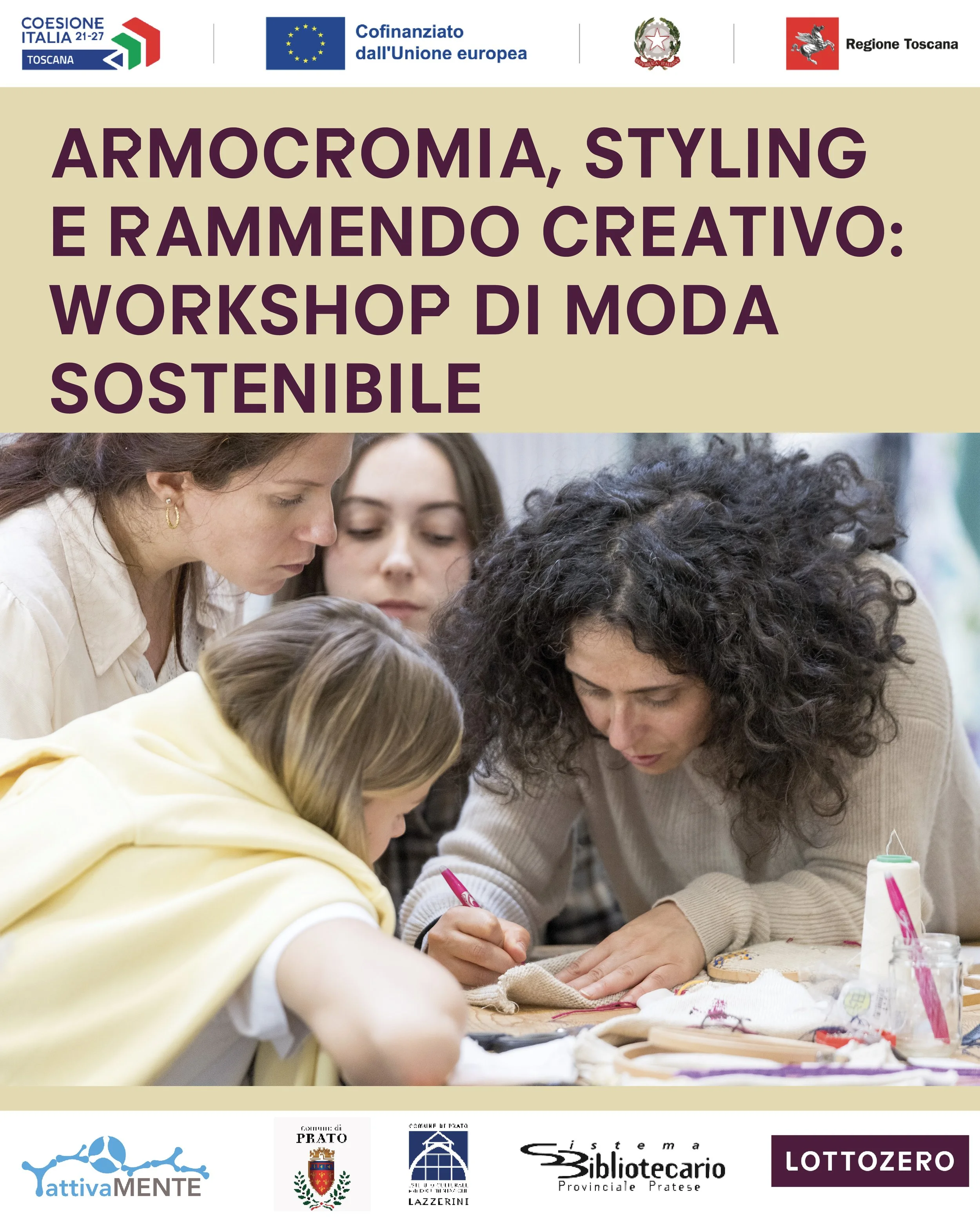
Fast fashion has a huge impact on our planet—but your wardrobe can be part of the solution!
This free 3-session workshop at Lottozero offers practical tools and creative inspiration to help you build a more mindful and sustainable relationship with your clothes.
Participants must attend all three sessions, for a total of 18 hours:
Creative Styling, with Maria Virginia Benvenuti: discover how to create coherent and personal looks using what you already own, reducing the need for new purchases.
Friday, September 25 – 10:00–13:00 / 14:00–17:00
Armocromia, with Maria Michela Mattei: learn how to choose the colors that best enhance your natural tones, helping you make more thoughtful wardrobe decisions.
Friday, October 2 – 10:00–13:00 / 14:00–17:00
Creative Mending, with Ginevra Consoli: learn techniques to repair and care for your clothes, extending their life and reducing textile waste.
Friday, November 6 – 10:00–13:00 / 14:00–17:00
This initiative is part of the attivaMENTE project, a lifelong learning program funded by PR FSE+ Tuscany 2021–2027, and coordinated by Sistema Bibliotecario Provinciale Pratese.
The workshop is in Italian and is open exclusively to individuals who are residents or domiciled in Tuscany.
Location: Lottozero, Via Arno 10 Prato
Registrations open till September 15 at this link
Download the brochure of the workshop
patron/ise, exhibition view, Lottozero Kunsthalle, 2026. Ph: Alessandro Destro
Join us on 23 July for an evening of exhibition tours and live performance, part of “patron/ise” exhibition’s public program, at Lottozero Kunsthalle.
At 19:00, curator Ester Maria d’Avossa and the exhibiting artists will lead a guided tour of the exhibition.
At 20:00, ive performance activating Carmen Buonanno’s site-specific installation, created in collaboration with British-Irish electroacoustic composer Muiredach O’Riain.
Through text and voice, the performance unfolds the work’s reflection on power and radical care, expanding Buonanno’s research into the language of protest, bringing together slogans from workers’ demonstrations in Prato’s textile district.
“patron/ise” is the final exhibition of the first residency cycle of Textile Art Factory at Lottozero, featuring works by Lorena Bucur ,Carmen Buonanno, Linda Ann Cipriani and Nikola Filipović , curated by Ester Maria d’Avossa.
Textile Art Factory is a project by Lottozero, Museo del Tessuto and Studio Corte 17, funded by the Regional Programme FSE+ Tuscany 2021–2027, under the Public Notice approved by D.D. n. 138/2024, and part of Giovanisì, the Tuscany Region’s initiative for youth autonomy.
As part of the WeaveUp+ project, Lottozero is launching an open call for a 10-day residency in Italy dedicated to sustainable wool production, material experimentation, and contemporary design.
Guided by master textile designer Arianna Moroder of Lottozero Studio, the residency will bring together a small group of creative practitioners to explore wool through site visits, workshops, hands-on making, and shared research across Italian textile landscapes. Participants will investigate sustainable wool production, traditional and contemporary techniques, and the creative potential of wool and production by-products in contemporary design.
The residency includes travel, accommodation, a meal stipend, mentorship from Arianna Moroder, and access to Lottozero's textile laboratories, machinery, and materials.
The open call is open to designers, artists, architects, researchers, makers, students, recent graduates, and early-career professionals based in Italy or neighbouring European countries. We welcome applicants from a range of creative disciplines with an interest in sustainable and circular design, textile heritage, material innovation, locally sourced materials, and experimental design practices. Previous experience in textiles is not required, but applicants should be eager to explore sustainable materials and production processes through collaborative learning and making.
To apply, complete the application form HERE and submit a CV and portfolio.
Application deadline: 31 August 2026, 9:00 AM.
For questions, please contact Lauren Berardi at lauren@lottozero.org
Amalia Galdona Broche is a US based artist from Santa Clara, Cuba.
Her work materializes and translates real and psychological landscapes, investigating identity, personal and collective memory, as well as belief systems and transculturation processes. Through textiles, she studies the complexities of identity-building as a Cuban-born woman touched by displacement, migration, and transculturation.
Via knotting, weaving, ropemaking, wrapping and other accumulative methods, her sculptures explore the role and definition of textiles in today’s world, focusing on the woven plane as a second skin, a weather-protective and complex reconfiguration of material, ideas, and memories. Manifested in organic, female and generative forms, her work acts as an offering, and act of sharing and expressing an identity that is multilingual, abstract and obscured, yet nuanced and familiar, as is the process of living in liminality.
During her residency at Lottozero, Amalia is in the early stages of a new body of work inspired by the mythical island of San Borondón, the legendary phantom island of the Canary archipelago and the birthplace of her father. Drawing on the island as a metaphor for migration, memory, and an imagined earthly paradise, she is experimenting with the digital jacquard loom to develop woven textiles with integrated three-dimensional elements, investigating how woven surfaces can generate volume before becoming part of a new sculptural body of work.
Amalia Galdona Broche earned a BFA in Sculpture and a BA in Art History from Jacksonville University, Florida. She has participated in residencies including the New York Academy of Art, MASS MoCA Studios, and WOC Residency. Her work has been exhibited at The Cummer Museum of Art and Gardens, Patricia Sweetow Gallery, Field Projects, The Parachute Factory, The Sculptors Alliance, and other venues.
Her residency at lottozero is funded by RISD New Technologies Fund.
Amalia Galdona Broche, Vestments in Time, 2023, installation view, woven, knotted and knitted textiles, synthetic resin, paint.
Amalia Galdona Broche, Los callos de una isla tienen caras I _ The Calluses of an island have faces I, 2023, synthetic resin, textile, beads, jute and other woven fibers, 67 x 50 inches.
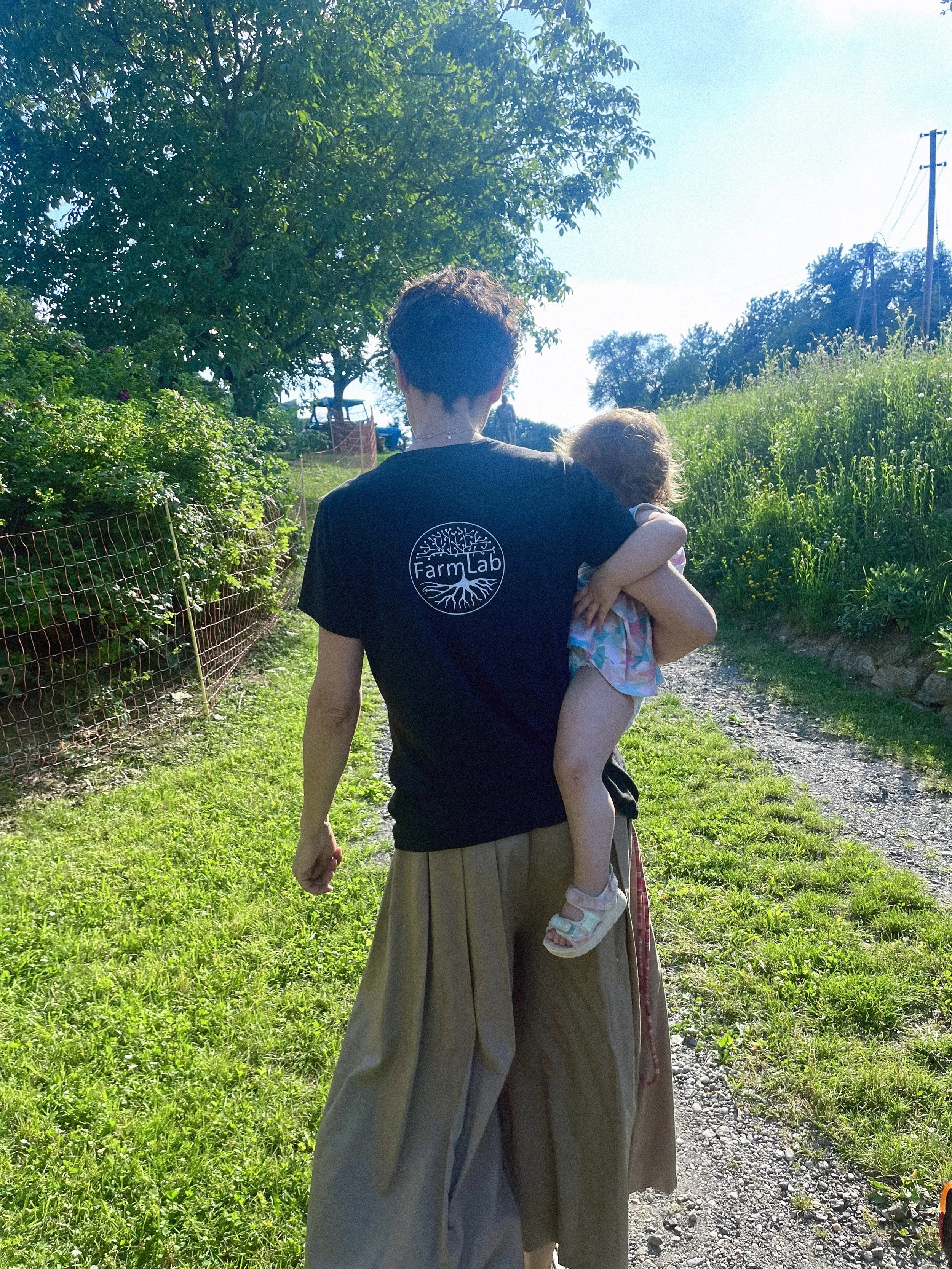
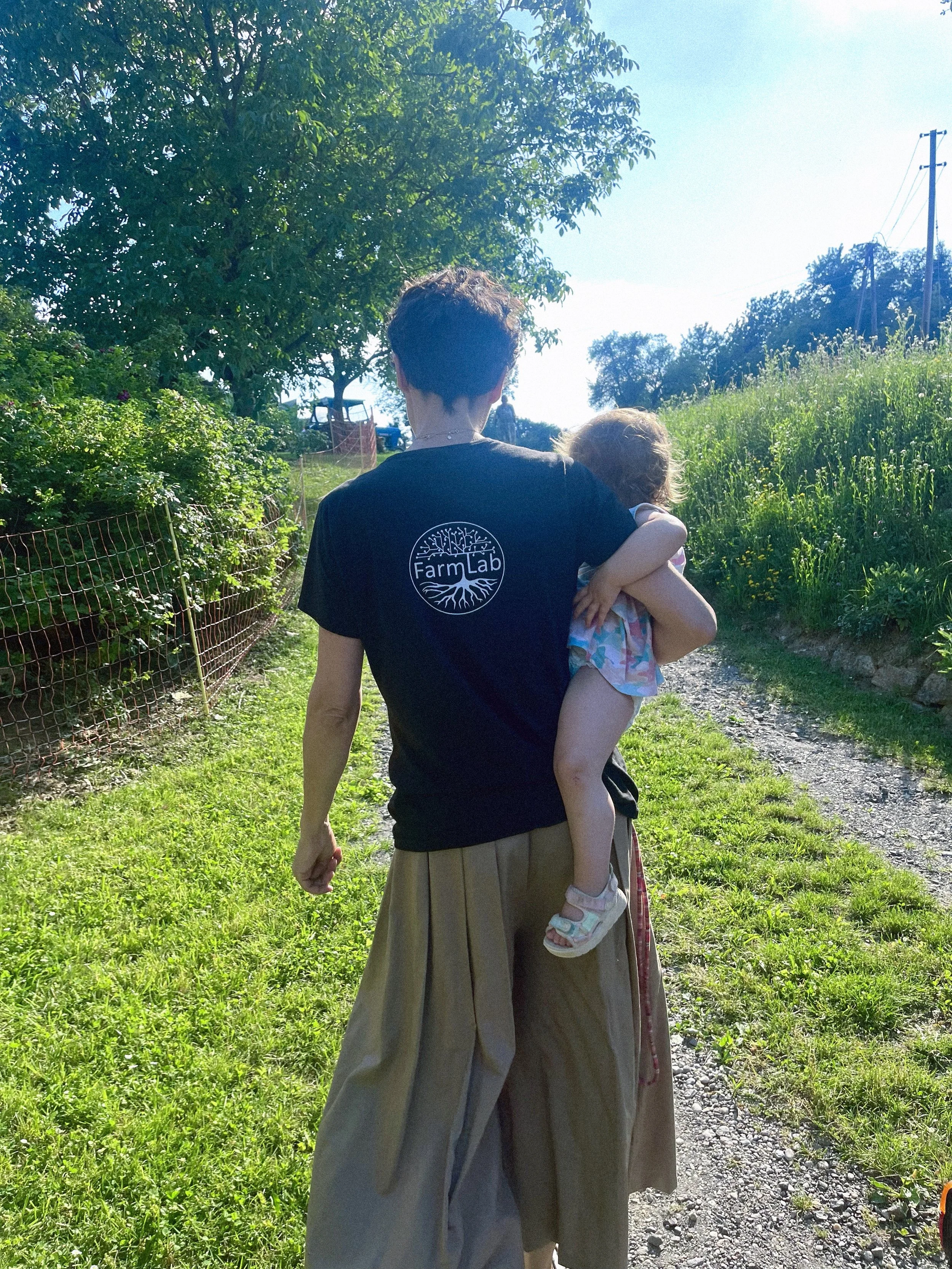
Last week, Lottozero's Lab Manager took part in a five-day staff exchange at FarmLab in Kapfenstein, Austria, as part of the European Creative Hubs Network (ECHN) Peer to Peer programme.
Hosted by Silvia, Martin and their family, the exchange offered an opportunity to experience first-hand how a rural creative hub operates, exploring the relationship between making, local knowledge, nature and community engagement. Throughout the week, the programme combined practical activities, discussions and shared experiences, highlighting how creative hubs can respond to the specific needs of their local contexts while remaining connected to an international network of practitioners.
The visit focused on FarmLab's textile activities and local material practices. Alongside learning about indigo dyeing and wool processing, the exchange also included the installation of a new tufting station in FarmLab's textile studio, creating new opportunities for future workshops and experimentation.
Beyond the practical work, the exchange provided valuable space for dialogue, sharing experiences and discussing different approaches to managing creative hubs. It was a pleasure to share the week with Natsuka, Angie and the DesignLabGive team, whose perspectives and conversations made the experience even richer.
At Lottozero, we strongly believe that international exchanges like these are essential for strengthening the European creative hub ecosystem. They foster meaningful collaborations, encourage the sharing of knowledge and skills, and inspire new ways of working that can be brought back to our local communities.
We would like to sincerely thank the European Creative Hubs Network for making this experience possible through the Peer to Peer programme, and FarmLab for their generous hospitality and openness throughout the week.
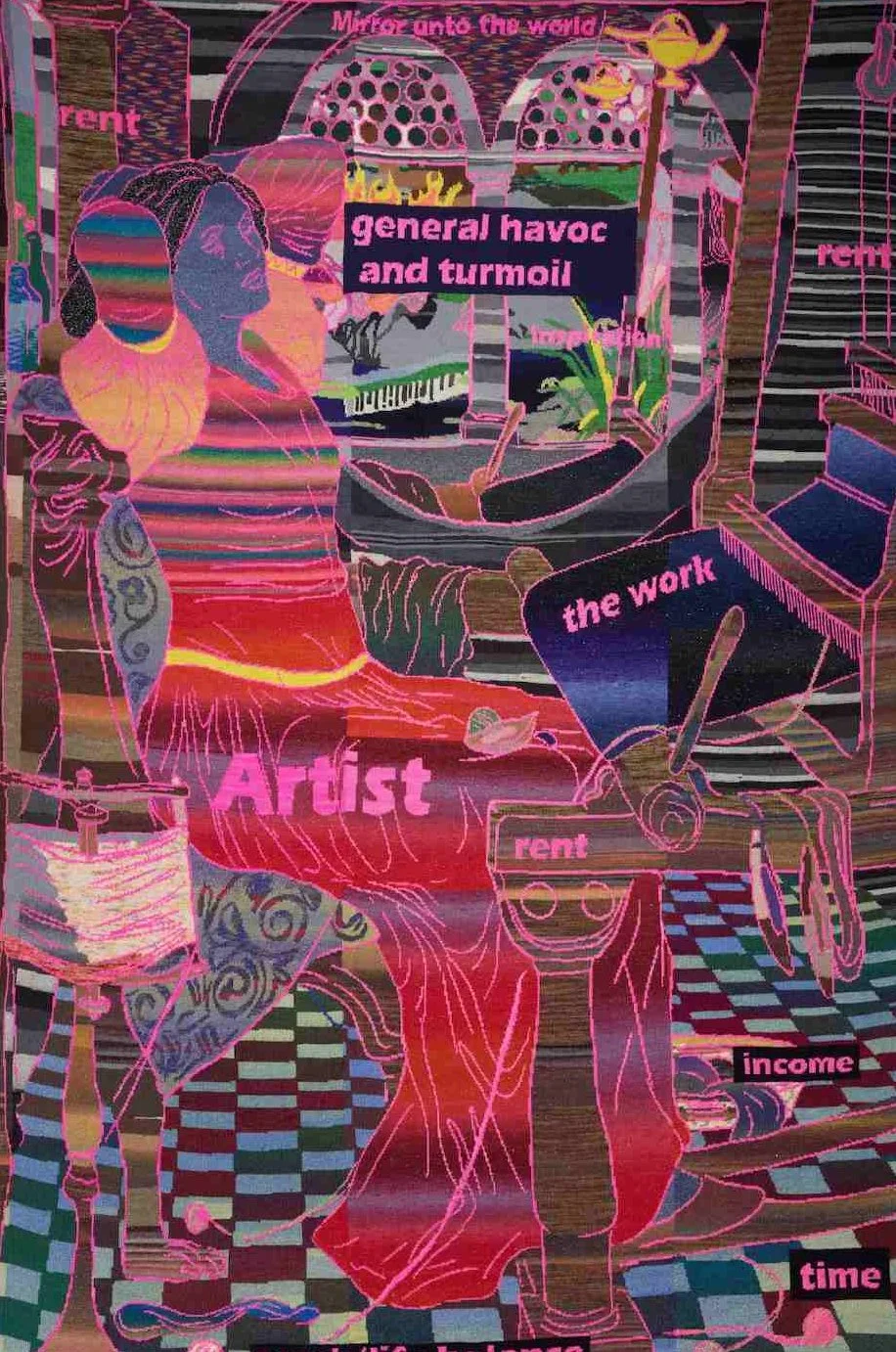
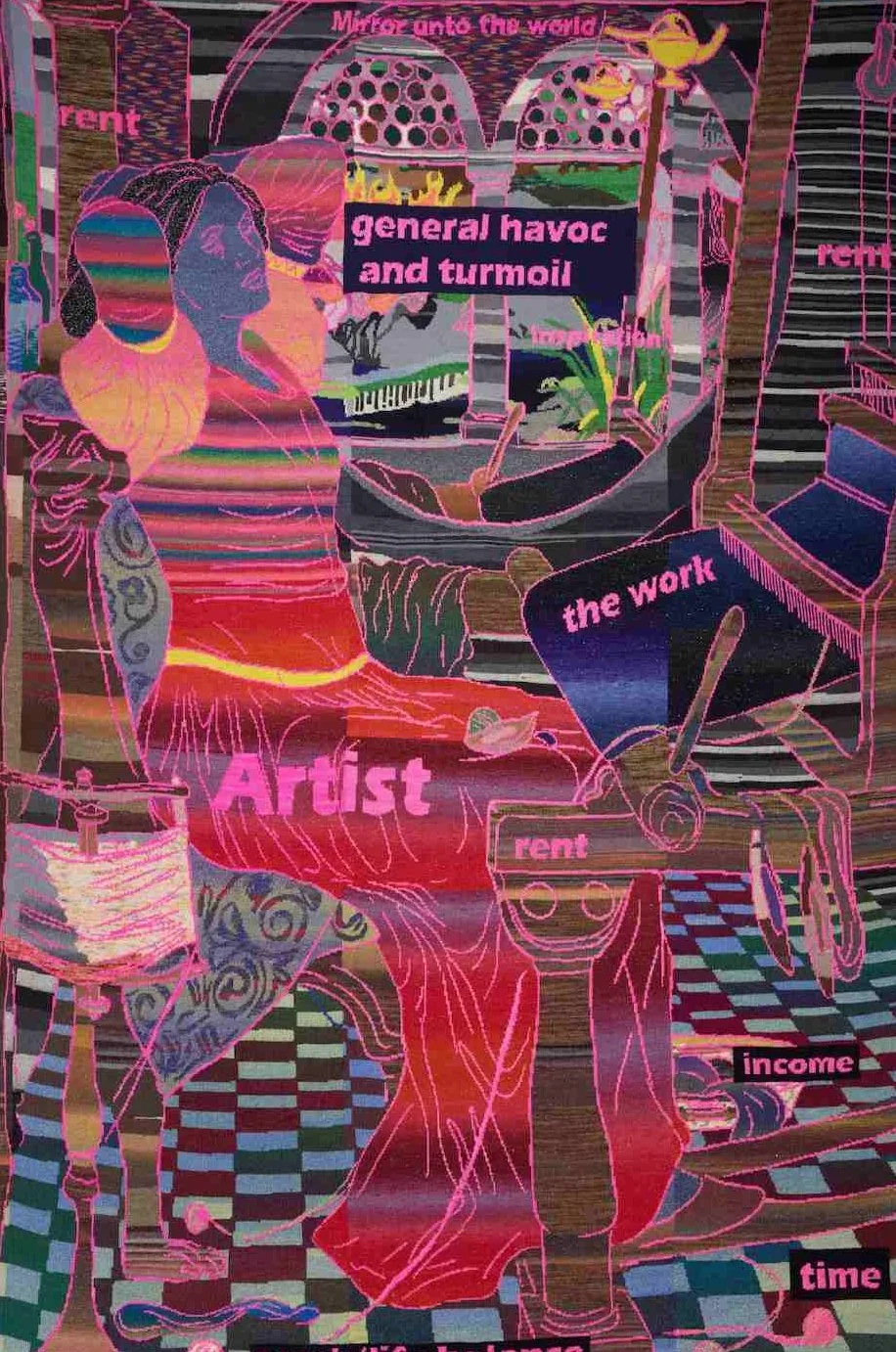
patron/ise reflects on the residency as a model of artistic production within today’s art system.
The exhibition, developed through six months of residency within the Textile Art Factory programme, engages with the dichotomy between what becomes visible in the artwork and what remains hidden within the dynamics and conditions of the creative process.
Taking shape in relation to Prato’s textile context and its factories, the exhibition looks at an art system that continues to produce while much of the labour that precedes and sustains it remains unseen: conversations, adaptations, emotional labour, exhaustion, endurance, and compromise.
The installations and sculptures on view speak about labour while also carrying traces of the labour that generated them. Buonanno addresses factory work, protest, disability, vulnerability, and endurance; Filipović and Bucur transform local remnants of production into narratives of migration, childhood, and memory; and Cipriani incorporates discarded machinery to reveal the hidden infrastructures of textile production.
Together, their works hold the tensions of the place in which they were made, the structures that enabled them, and the compromises that shaped them.
Curated by Ester Maria d’Avossa.
Artists: Lorena Bucur, Carmen Buonanno, Linda Ann Cipriani, Nikola Filipović
Opening: 14.07.2026, h 18:30
15.07 – 11.10.2026
Lottozero, Via Arno 10, Prato
Mon – Thu 10-18; Fri 10-16; Sat and Sun by appointment
T. 0574 22883 / info@lottozero.org
Textile Art Factory is a project by Lottozero, Museo del Tessuto and SC17, funded by the Regional Programme FSE+ Tuscany 2021–2027, under the Public Notice approved by D.D. n. 138/2024, and part of Giovanisì, the Tuscany Region’s initiative for youth autonomy.
Emma Buswell, The Pool (The Lady of Shallot), 2024, knitted wool and lurex yarns, 430 x 270cm (detail)
Emma Buswell, Endlessly Circling Fields, 2026, knitted lurex, wool, cotton, nylon yarn 150 x 290 cm
Emma Buswell is a West Australian based artist, curator and designer.
Emma is fascinated with systems of government, economies and culture particularly in relation to constructs of place, identity and community. Her current work is focusing on relationships between identity and place, with a motivated enquiry into the way in which kitsch and nostalgia play into our understandings of self-identification and personal histories. Using Tropes appropriated from popular culture and Australian art history, Buswell examines her own family histories intuited through conversations and the learnt craft techniques from her maternal family line
During her three-week residency at Lottozero, Emma will explore the felt loom as an extension of her textile practice. Building on her research into handcraft traditions, women's labour and textile histories, she will investigate how industrial felt-making can open up new material and visual possibilities.
Emma Buswell has had solo exhibitions across Western Australia and Victoria, and is collected in the State Collection of Western Australia, Artbank, the City of Joondalup and a number of private collections.
Join us for the final exhibition of the first cycle of Textile Art Factory, a residency programme dedicated to contemporary textile practices, organized by Lottozero, Sudio Corte 17 and Museo del Tessuto di Prato.
After six months of research, experimentation, and production in dialogue with the textile district of Prato, the residents will present the outcomes of their work in a collective exhibition.
The exhibition presents new works by Carmen Buonanno, Linda Ann Cipriani, Lorena Bucur and Nikola Filipović, developed throughout the residency and curated by Ester Maria d’Avossa.
The exhibition opens on Tuesday, 14 July, from 6:30 PM to 10:00 PM, at the Lottozero Kunsthalle.
See you there!
Textile Art Factory is a project by Lottozero, Museo del Tessuto and SC17, funded by the Regional Programme FSE+ Tuscany 2021–2027, under the Public Notice approved by D.D. n. 138/2024, and part of Giovanisì, the Tuscany Region’s initiative for youth autonomy.
Carla Schwering is a textile and costume designer, born in Vienna and based in Munich. After studying theatre science and art history at LMU Munich alongside an assistantship at the Residenztheater, she continued her education in stage and costume design, film, and exhibition architecture at the Mozarteum Salzburg. She has collaborated with theatres and cultural institutions including the Burgtheater Vienna, the Goethe-Institut Paris, and the Bregenzer Festspiele. During an Erasmus year at the Royal Academy of Art in The Hague, she further developed her focus on textile design.
Working across costume, textiles, film, photography, and spatial design, Carla combines drawing, material experimentation, and narrative imagery to create fictional worlds that reflect and reinterpret contemporary society. During her two-week residency at Lottozero, she is experimenting with manual and digital jacquard weaving, developing textile pieces for a film installation that forms part of her diploma thesis at the Mozarteum Salzburg.
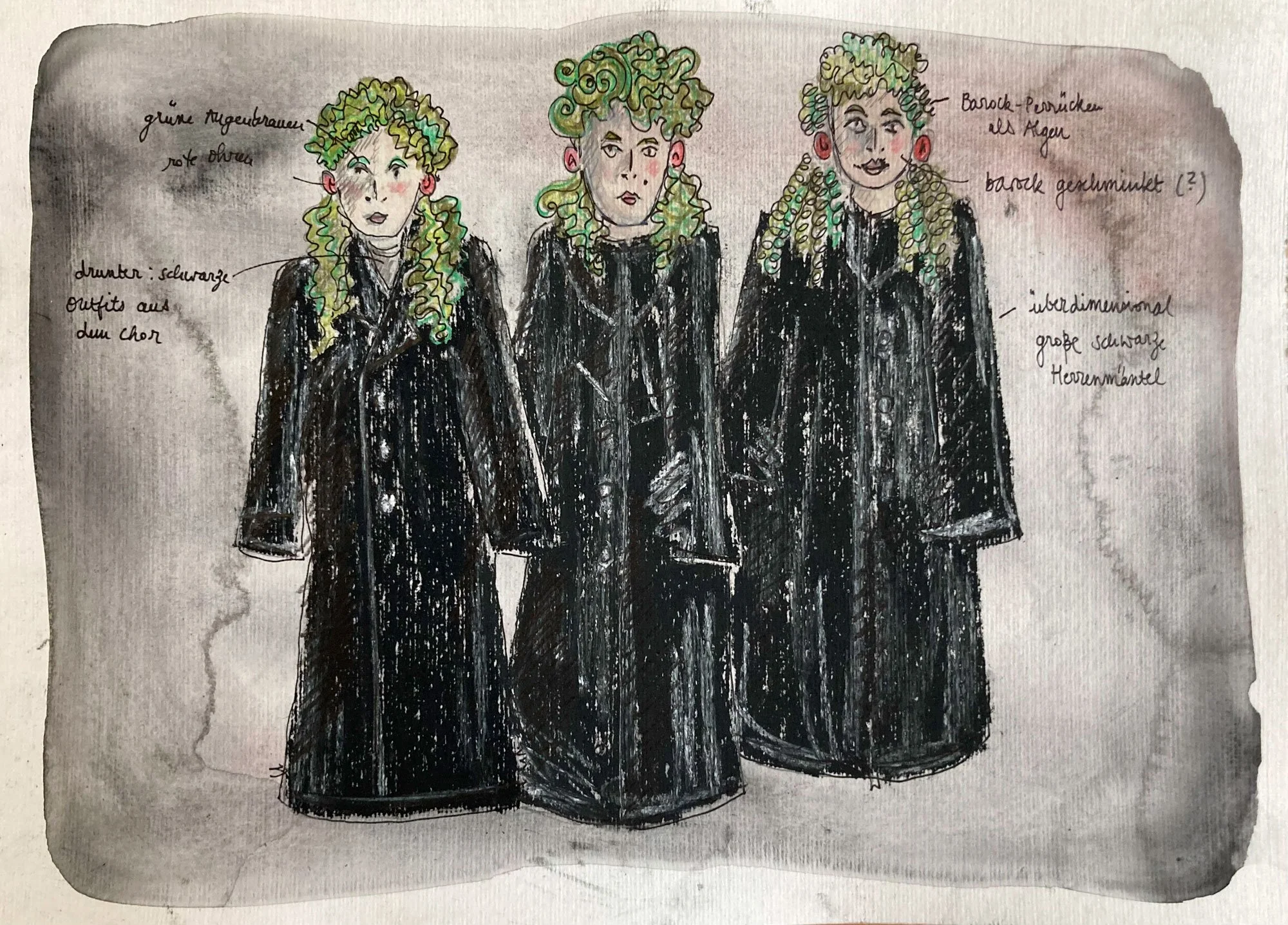
Carla Schwering, drawing for costume design for the opera Dido & Aeneas, directed by Rosamund Gilmore, presented at Accademia Musicale Chigiana, Siena, 2023
Paulina Włostowska
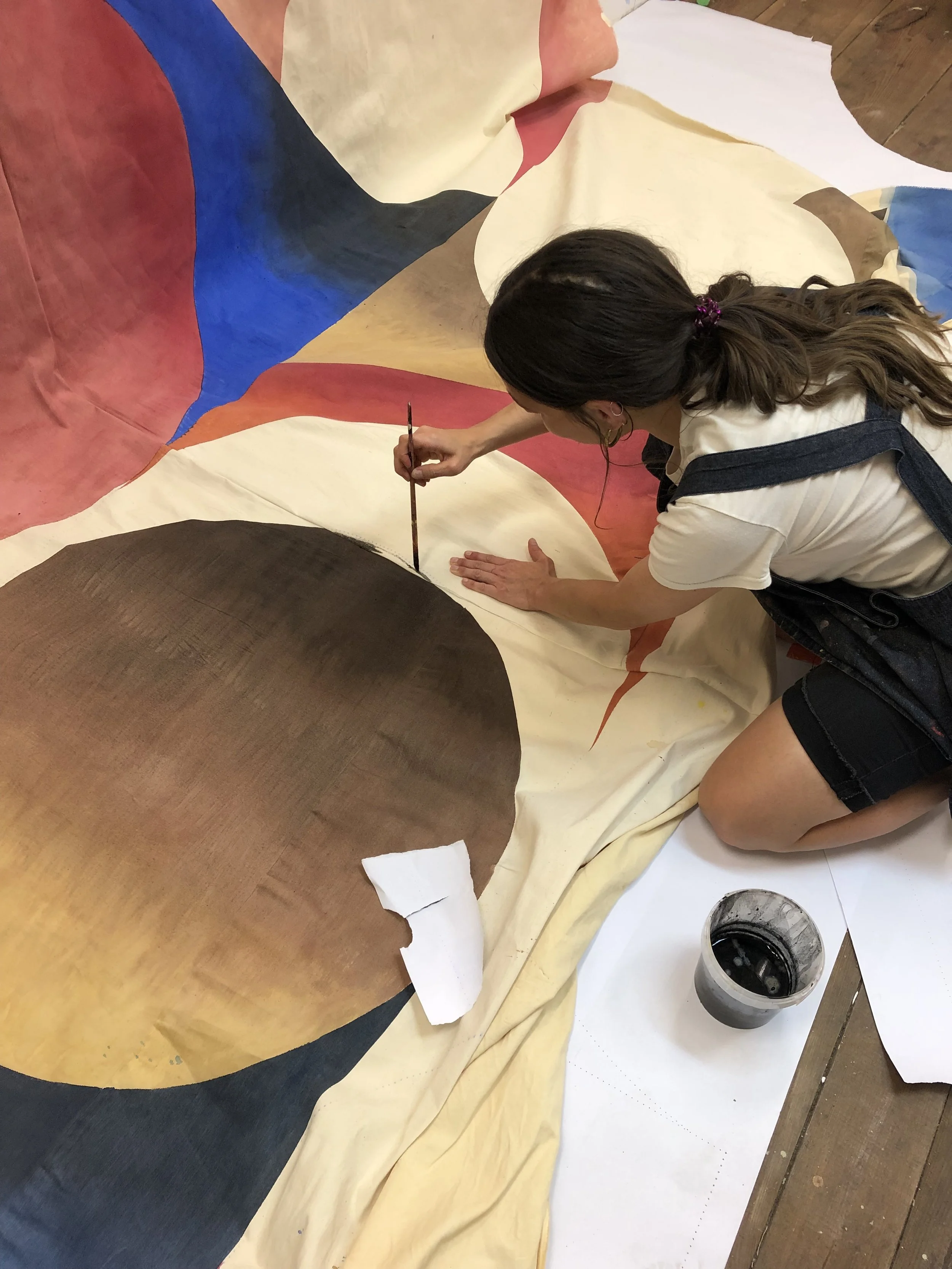
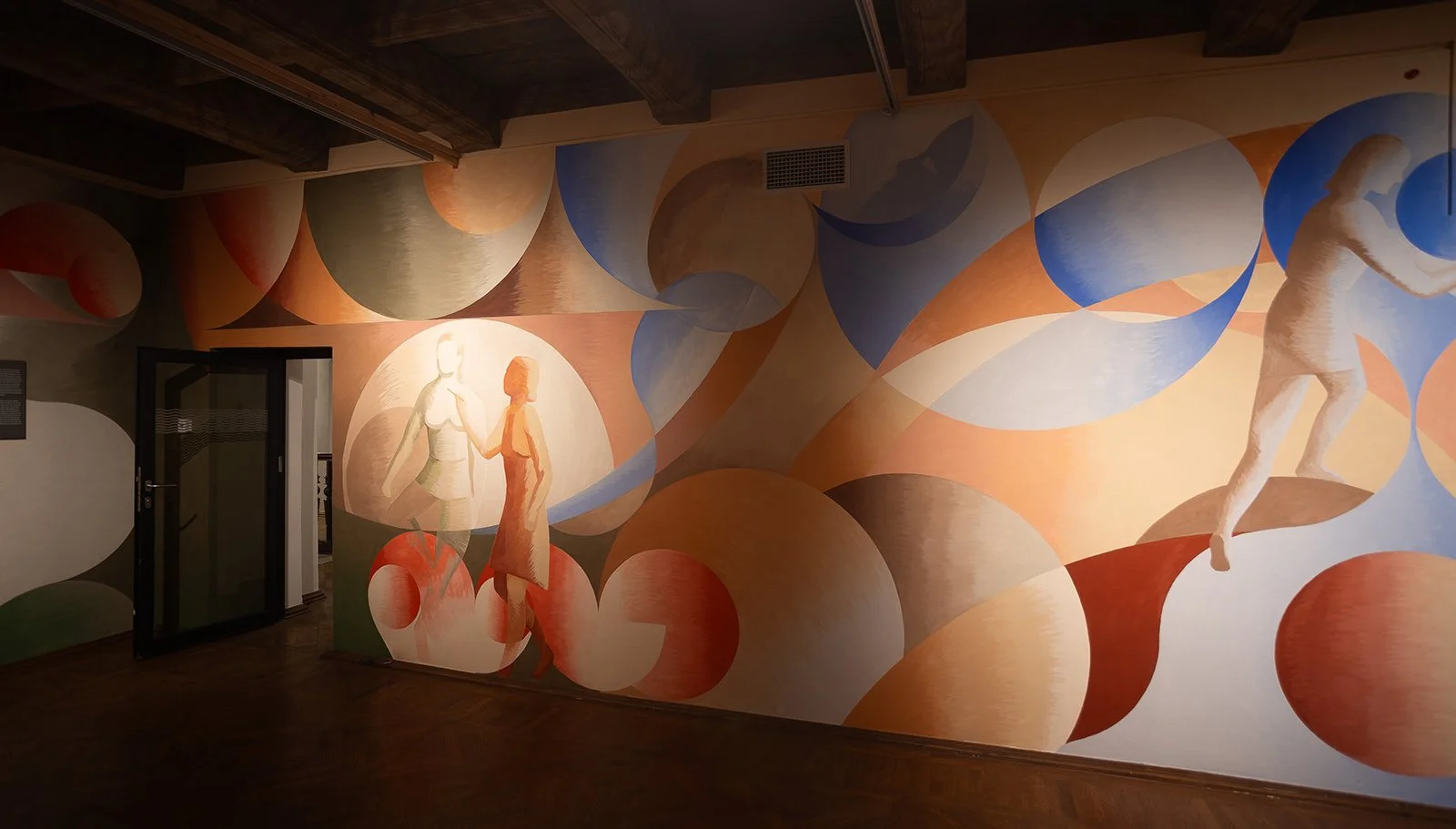
Paulina Włostowska and Michał Szczęsny Szuwar, Museum of Warsaw, 2023.
As a duo artistic collective, Paulina Włostowska and Michał Szuwar have undertaken projects involving textiles, painting, lettering and printmaking.
As a visual artist, Paulina Włostowska explores the status of decorative arts in the context of post-war Polish history, as well as their contemporary significance. Together with Michał
Szuwar, they have been carrying out projects for several years that straddle the boundary between craft and fine art within the aforementioned fields, as well as murals and fabric by the metre.
Michał Szuwar runs lettering and textural painting studios, where he utilises goldsmithing and screen-printing techniques.
Both are actively engaged as visual artists while also exploring craftsmanship and technology, particularly in the context of large-format mural painting.
During their 2-week residency at Lottozero, they will develop collaborative textile pattern designs, experimenting with screen printing and weaving techniques.
The residency is co- financed by the Minister of Culture and National Heritage of the Republic of Poland - Adam Mickiewicz Institute